The Watch That Knew First: Wearables, Early Detection, and the Medical System Scrambling to Keep Up
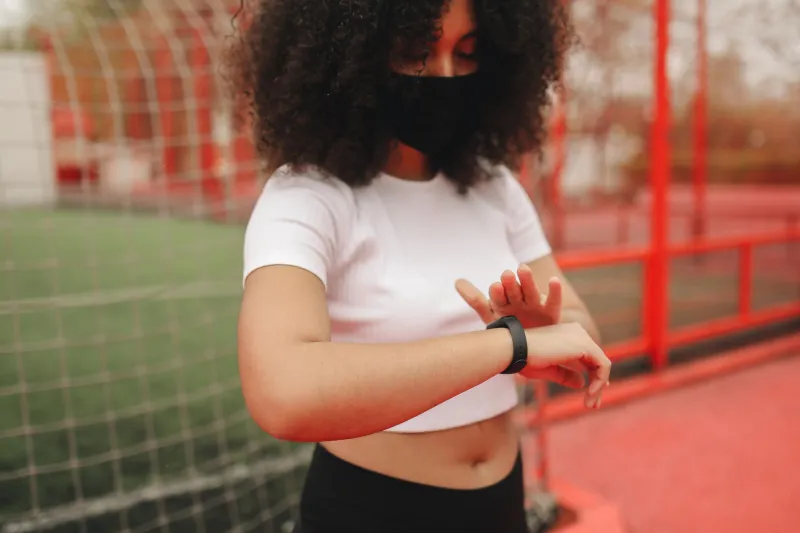
David Mercer was folding laundry on a Tuesday evening in Raleigh, North Carolina, when his watch buzzed. Not the usual notification—a text, a step count, a calendar reminder. This was different. The alert read: Irregular heart rhythm detected. Your heart rate appears to be unusually high or low. Consider speaking with your doctor.
Mercer, then 52, had no history of cardiac disease. He felt fine. He almost dismissed the notification. Instead, he drove to an urgent care clinic the following morning, where an electrocardiogram confirmed atrial fibrillation—a condition that, left undetected and untreated, significantly elevates stroke risk. His cardiologist later told him the wearable may well have caught something that a standard annual physical would have missed entirely.
"I wear that watch every day now," Mercer says. "It's not just fitness tracking anymore. It's part of how I understand my own health."
A New Category of Clinical Alert
Mercer's experience is becoming less extraordinary by the month. Consumer wearables—led by devices like the Apple Watch, Samsung Galaxy Watch, and Fitbit Sense—have quietly evolved from step-counting novelties into sophisticated physiological monitoring platforms. The Apple Watch Series 4 and later models carry FDA clearance for electrocardiogram functionality. Newer iterations offer blood oxygen saturation monitoring, irregular rhythm notifications, and, in some markets, blood pressure estimation.
The clinical implications are significant. Atrial fibrillation, which affects an estimated 6 million Americans, is frequently asymptomatic in its early stages. Hypertensive crises can develop without obvious warning. Sleep apnea, a condition associated with cardiovascular disease and metabolic dysfunction, often goes undiagnosed for years. Continuous passive monitoring—the kind a wearable performs simply by being worn—creates an opportunity to surface these conditions far earlier than the traditional episodic care model allows.
Dr. Anita Krishnamurthy, a cardiologist at a large academic hospital in Houston, has observed the shift firsthand. "Patients are coming in with wearable data that is genuinely clinically useful. I've had patients show me weeks of heart rate variability trends, irregular rhythm flags, blood oxygen dips at night. That longitudinal picture is something we simply cannot generate from a 12-lead ECG in an exam room."
When the Alert Is Right—and When It Isn't
The early-detection capability of consumer wearables is real. So are its limitations. The same sensitivity that allows a device to flag a genuine arrhythmia also generates false positives—alerts triggered by motion artifact, device fit, or normal physiological variation that a monitoring algorithm interprets as anomalous.
Research published in JAMA Cardiology examining Apple's large-scale Heart Study found that while the platform successfully identified irregular pulses warranting follow-up, only a fraction of those flagged were ultimately confirmed as atrial fibrillation upon clinical evaluation. The study's authors noted that the positive predictive value—the probability that a positive alert reflects a true condition—was approximately 84 percent under the study's specific conditions, a figure that sounds reassuring until one considers the anxiety and healthcare utilization generated by the remaining alerts.
For some patients, a wearable notification initiates a cascade of urgent care visits, cardiologist referrals, and diagnostic testing that ultimately confirms nothing actionable. The psychological toll of that experience is not trivial.
Sandra Okafor, a 44-year-old teacher in Atlanta, received three separate irregular rhythm alerts from her smartwatch over the course of four months. Each prompted an urgent clinic visit. Each returned normal clinical findings. "By the third time, I was terrified before I even got to the doctor's office. And then I'd get there and they'd say everything was fine. I didn't know whether to trust the watch or trust the doctors. That uncertainty is exhausting."
The Regulatory Landscape: Wellness Versus Medicine
At the center of the wearable monitoring debate lies a regulatory distinction that carries significant practical consequences. The FDA differentiates between general wellness devices—those intended to promote healthy habits without making specific medical claims—and medical devices, which are subject to premarket review and clearance requirements.
Many wearable features occupy an ambiguous middle ground. A device that monitors heart rate for fitness purposes is a wellness product. The same device, when it alerts a user to a potential arrhythmia and recommends consulting a physician, is operating closer to the boundary of a medical device—and the regulatory treatment of that functionality varies depending on how the manufacturer frames it.
The FDA's Digital Health Center of Excellence has worked to clarify this landscape through its Software as a Medical Device framework and its De Novo and 510(k) clearance pathways. Apple's ECG app, for instance, carries explicit FDA clearance. But a growing number of wearable health features reach consumers without equivalent review, marketed under wellness language that technically keeps them outside the regulatory perimeter while functionally influencing clinical decision-making.
"The gap between what these devices are marketed as and what patients use them for is enormous," says a regulatory affairs consultant who works with digital health companies seeking FDA clearance. "A manufacturer can say their blood oxygen feature is not intended to diagnose sleep apnea, and technically that's true. But patients are absolutely using it that way, and some clinicians are acting on that data."
Access, Equity, and the Monitoring Divide
The early-detection promise of wearable technology is not equitably distributed. A device capable of detecting atrial fibrillation before it causes a stroke retails at prices that place it out of reach for a substantial portion of the American population. The communities most likely to face barriers to traditional preventive care—rural residents, uninsured and underinsured Americans, lower-income households—are also the least likely to have access to continuous monitoring technology.
This dynamic risks creating a two-tier health system in which those with greater financial resources receive an additional layer of passive, continuous clinical surveillance, while those without absorb the full burden of episodic, reactive care. Addressing that inequity will require deliberate policy intervention—whether through insurance coverage mandates, Medicaid inclusion, or subsidized device access programs—that has not yet materialized at scale.
What Comes After the Alert
Perhaps the most underdeveloped dimension of the wearable monitoring revolution is what happens after a device flags something. The clinical infrastructure for receiving, triaging, and acting on patient-generated health data remains fragmented. Most electronic health record systems are not designed to ingest continuous wearable data in a clinically meaningful way. Most physicians have not established protocols for responding to patient-initiated wearable alerts outside of scheduled appointments.
For platforms like mHealthSystem, which are built to bridge the distance between patient-generated data and clinical response, this gap represents both a challenge and an imperative. The wearable is only as useful as the system prepared to receive its signal.
David Mercer's watch caught something real. But the more important question—the one the entire digital health ecosystem is still working to answer—is what happens the moment after the watch buzzes, and whether the medical system on the other end is ready to listen.