Beyond the Buzz: A Clinician-Informed Guide to What Your Fitness Tracker Actually Knows
The Wrist as a Diagnostic Frontier — With Caveats
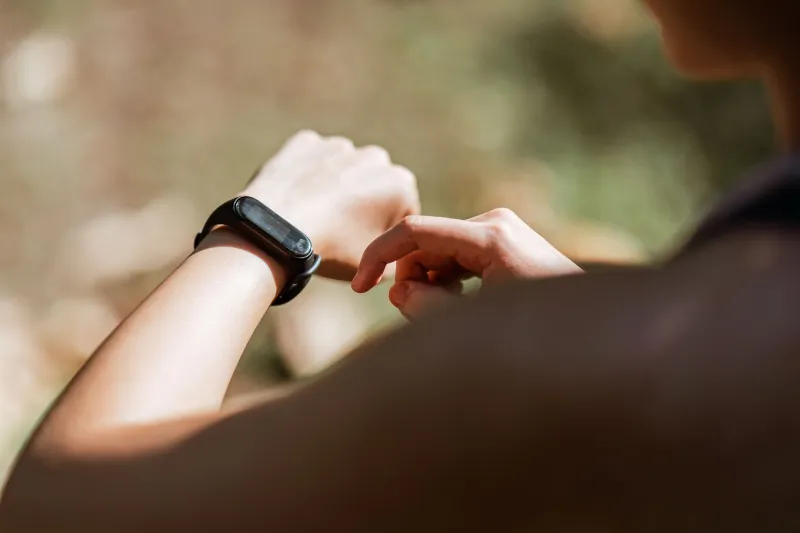
The consumer wearable market has expanded at a pace that outstrips most regulatory and clinical frameworks designed to evaluate it. Apple Watch, Fitbit, Garmin, Samsung Galaxy Watch, and a growing roster of competitors now promise to track dozens of physiological parameters continuously and passively. For many Americans, these devices represent their most frequent point of contact with health monitoring technology — more regular than annual physicals, more accessible than specialist appointments.
That ubiquity carries both promise and risk. When a wearable accurately detects an irregular heart rhythm and prompts a user to seek evaluation, the technology may be life-saving. When it generates anxiety over a metric that lacks clinical relevance, or when it creates a false sense of security by failing to detect a genuine problem, the consequences can be equally significant — if less visible.
The challenge for consumers is navigating a landscape where marketing language and clinical evidence do not always align.
Which Metrics Have Earned Their Credibility
Not all wearable measurements are created equal. Some have been subjected to rigorous peer-reviewed validation; others exist primarily because the sensor hardware makes them technically feasible, regardless of their clinical utility.
Heart rate and resting heart rate represent the most established wearable measurements. Optical photoplethysmography — the technology underlying most wrist-based heart rate tracking — has been validated across multiple independent studies as reasonably accurate for resting and moderate-activity monitoring. Accuracy decreases during high-intensity exercise or when the device fits loosely, but for the purposes of tracking resting heart rate trends over time, consumer wearables perform acceptably.
Atrial fibrillation detection is where consumer wearables have made their most clinically significant contribution. The Apple Watch's ECG feature received FDA clearance in 2018 and has since been validated in several published studies, including a large-scale trial published in the New England Journal of Medicine. The device's ability to detect AFib in asymptomatic individuals has been credited with prompting diagnoses that may have otherwise gone undetected for years. Fitbit received similar FDA clearance for its AFib detection algorithm in 2022. It is worth noting, however, that these tools are designed for screening, not diagnosis — a positive alert should always be followed by clinical evaluation.
Blood oxygen saturation (SpO2) became a headline feature during the COVID-19 pandemic, when pulse oximetry entered mainstream awareness. Consumer wearables that measure SpO2 using optical sensors can provide directional information, but their accuracy — particularly in individuals with darker skin tones — has been called into question by multiple studies, including a 2022 analysis in the journal JAMA Internal Medicine. This disparity has equity implications that are not always acknowledged in product marketing. For clinical decisions related to respiratory conditions, a dedicated medical-grade pulse oximeter remains the appropriate instrument.
Metrics That Require More Skepticism
Heart rate variability (HRV) is a physiological measure that has genuine clinical relevance in research and clinical contexts — but its translation to consumer wearables is inconsistent. HRV reflects the variation in time between successive heartbeats and is associated with autonomic nervous system function and recovery status. However, the methodology used by different wearable manufacturers varies significantly, making cross-device comparisons unreliable and population-level benchmarks difficult to apply to individual readings. Treating a single HRV score as a definitive health indicator is premature.
Stress scores and body battery metrics — proprietary composite scores offered by brands like Garmin — aggregate multiple data streams into a single index. While these scores may have value as motivational tools for lifestyle awareness, they are not clinically validated diagnostic instruments. The algorithms generating them are typically proprietary and not subject to independent peer review.
Blood glucose estimation via wearable is an area of active development but, as of this writing, no consumer smartwatch has received FDA clearance for non-invasive glucose monitoring. Claims to the contrary should be treated with considerable caution.
When to Bring Wearable Data to Your Physician
The question of how to integrate wearable data into clinical care is one that many physicians are still navigating. A 2023 survey by the American Medical Association found that while a majority of physicians believe wearable data has potential clinical value, fewer than half felt adequately equipped to interpret it within a standard appointment.
As a practical guideline, wearable data is most useful when it documents a specific, recurring pattern rather than a single anomalous reading. A log showing consistently elevated resting heart rate over several weeks is more clinically informative than one elevated reading taken after a stressful commute. Similarly, an alert from an FDA-cleared AFib detection feature warrants prompt medical attention regardless of whether symptoms are present.
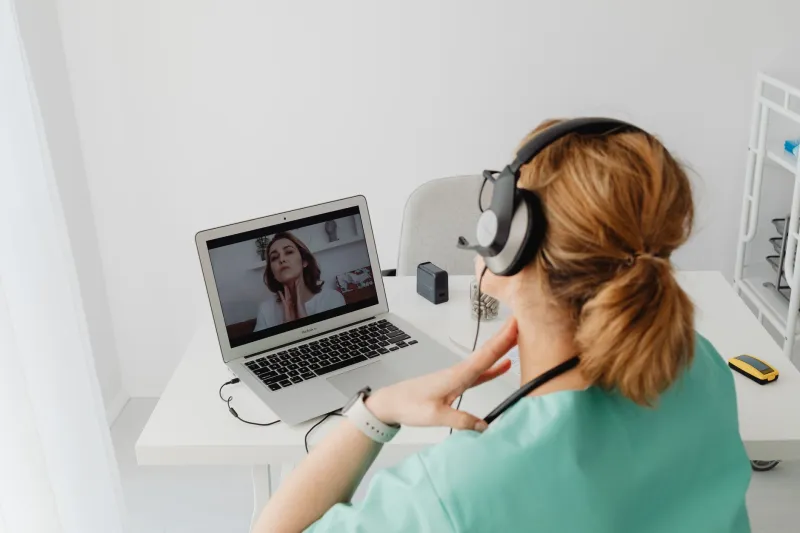
Many telehealth platforms, including those integrated with Apple Health or Google Fit, now offer mechanisms for patients to share wearable data with their care team prior to a virtual visit. Leveraging these integrations can make the clinical conversation more efficient and grounded in objective data.
Before your next appointment, consider exporting a summary of relevant trends from your device's companion app and sharing it through your patient portal's secure messaging function. This approach respects your provider's time while ensuring the data is reviewed in context rather than dismissed as anecdotal.
The Privacy Trade-Off Consumers Rarely Read About
Health data generated by consumer wearables occupies a regulatory gray area that many users do not fully appreciate. Data collected by wearable devices and their companion apps is generally not protected by HIPAA, which governs health information held by covered entities such as hospitals and insurers — not consumer technology companies. This means the heart rate, sleep, and menstrual cycle data stored on a fitness platform may be subject to different data-sharing practices than the records in your physician's EHR.
Reviewing the privacy policy of any wearable platform before purchase is advisable. Key questions include whether health data is sold to third parties, whether it can be accessed by insurers, and what data deletion rights are available to users. Several states, including California, have enacted consumer privacy protections that extend to health-adjacent data, but federal protections remain limited.
For individuals in underserved communities — who already face structural inequities in healthcare access — the prospect of health data being used in ways that could affect insurance eligibility or employment deserves particular attention. Healthcare equity in the digital age requires not only expanding access to health technology but ensuring that access does not come with hidden costs.
Making Wearables Work for You
Consumer wearables, used thoughtfully, represent a meaningful addition to an individual's health management toolkit. The key is calibrating expectations: these devices are most valuable as longitudinal trend monitors and early-alert systems, not as replacements for clinical evaluation. When a wearable raises a concern, the appropriate response is to bring that concern to a qualified healthcare provider — not to self-diagnose based on an algorithm.
As digital health platforms continue to evolve, the integration between wearable data and clinical care pathways will deepen. The consumers best positioned to benefit from that evolution will be those who understand both the capabilities and the limitations of the devices on their wrists.