The Store-and-Forward Revolution: How Asynchronous Telehealth Is Quietly Reshaping American Medicine

For most of the past decade, the dominant narrative around telemedicine centered on video visits—the live, face-to-face encounter conducted over a secure digital connection. It was, in many respects, the natural first step: replicating the familiar structure of an in-person appointment while removing the need for physical proximity. But a quieter, arguably more transformative model has been gaining ground, one that does not require a patient and clinician to be available at the same moment at all.
Asynchronous telehealth—often called store-and-forward care—operates on a fundamentally different premise. Patients submit photographs, symptom descriptions, medical histories, or biometric data through a digital platform. A licensed clinician reviews that information on their own schedule and returns a diagnosis, treatment recommendation, or referral, typically within hours. No scheduling conflict. No waiting room. No blocked calendar.
For working Americans—particularly those managing hourly jobs, caregiving responsibilities, or limited transportation—the implications are significant.
Understanding the Distinction: Synchronous vs. Asynchronous Care
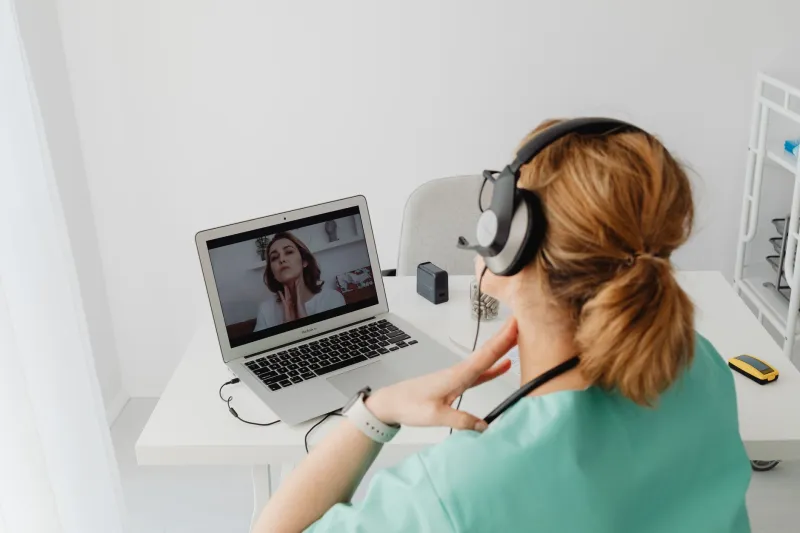
Synchronous telemedicine requires both parties to be present simultaneously. A live video consultation with a primary care physician, a real-time psychiatric evaluation conducted over a secure platform, or an urgent care visit handled through a health system's virtual clinic all fall into this category. The model closely mirrors in-person care in terms of its structure, and it has demonstrated clear value for acute consultations and ongoing therapeutic relationships.
Asynchronous care, by contrast, decouples the clinical interaction from the constraint of shared time. The term "store and forward" originates from radiology and dermatology, where clinical images were historically transmitted to specialists in distant locations for review at a later point. That same principle has now expanded into a much broader range of clinical contexts, enabled by mobile devices, secure health platforms, and increasingly sophisticated data capture tools.
The distinction matters because the two models serve different patient needs—and, critically, different populations.
Who Benefits Most—And Why Equity Is Central to the Conversation
The United States healthcare system has long struggled to deliver equitable access across geographic, economic, and demographic lines. Rural communities face persistent shortages of specialists. Hourly workers cannot always afford to take time off for a midday appointment. Single parents managing childcare rarely have the flexibility to sit through a scheduled video visit during clinic hours.
Asynchronous care disrupts several of these structural barriers simultaneously. A patient in rural Mississippi can photograph a suspicious skin lesion at 9 p.m. and receive a board-certified dermatologist's assessment by the following morning—without traveling two hours to the nearest specialist or waiting six weeks for an available appointment slot. A warehouse worker in suburban Ohio can submit a description of recurring symptoms during a break and receive a clinician's response before the end of the shift.
This is not a hypothetical efficiency gain. Studies examining store-and-forward dermatology programs have found that median time to diagnosis can be reduced from several weeks to fewer than three days, with diagnostic accuracy comparable to in-person assessments for a broad range of common skin conditions. For conditions where early detection matters—melanoma being the most consequential example—that compression of time can carry life-or-death implications.
Real-World Applications Across Specialties
Dermatology remains the most mature application of asynchronous telehealth in the United States. Platforms such as Teladoc's dermatology service, DermTech, and First Derm allow patients to submit high-resolution images of skin concerns for specialist review. Several state Medicaid programs have incorporated store-and-forward dermatology into their covered benefits, recognizing the access gains for underserved populations.
Radiology has operated on a functionally asynchronous model for years, with digital imaging transmitted to reading radiologists who may be located in different time zones or even different countries. The integration of AI-assisted image analysis is accelerating this further, enabling preliminary flagging of findings before human review—though regulatory and liability frameworks around AI-generated clinical outputs remain an active area of policy development.
Chronic disease monitoring represents one of the most rapidly expanding frontiers. Patients managing type 2 diabetes, hypertension, or heart failure can now transmit blood glucose readings, blood pressure logs, or electrocardiogram data from consumer-grade connected devices to their care team through integrated mHealth platforms. Clinicians review trending data asynchronously and intervene—adjusting medications, ordering additional testing, or escalating to in-person care—based on what that data reveals, rather than waiting for the next scheduled appointment.
Mental health is beginning to incorporate asynchronous elements as well, though with appropriate nuance. Text-based therapy platforms such as BetterHelp operate on a partially asynchronous model, allowing patients to compose messages to licensed therapists on their own schedule. While this approach is not appropriate for crisis intervention or severe psychiatric conditions, it has shown value for mild-to-moderate anxiety and depression in populations who might otherwise receive no professional support at all.
The Clinical and Regulatory Landscape
Not all clinical encounters are appropriate for asynchronous delivery. Conditions requiring immediate physical examination, acute emergencies, or complex diagnostic reasoning that benefits from real-time dialogue between patient and clinician are better served by synchronous or in-person models. The clinical judgment about which modality is appropriate remains a critical professional responsibility.
From a regulatory standpoint, asynchronous telehealth occupies a nuanced space. Licensure requirements still generally mandate that clinicians be licensed in the state where the patient is located at the time of service—a rule that applies equally to synchronous and asynchronous encounters. The temporary flexibilities introduced during the COVID-19 public health emergency expanded cross-state practice in ways that benefited both models, and ongoing federal and state legislative activity continues to shape the permanent regulatory framework.
Reimbursement has historically favored synchronous care, but that, too, is shifting. The Centers for Medicare and Medicaid Services (CMS) has expanded coverage for certain asynchronous services, and commercial insurers have followed. The ATA (American Telemedicine Association) continues to advocate for parity provisions that would ensure asynchronous services are reimbursed at rates comparable to their in-person equivalents.
What This Means for the Future of Digital Health Delivery
The trajectory is clear. As connected health devices become more capable, as AI-assisted clinical decision support matures, and as patient expectations evolve toward on-demand digital interactions in every other domain of life, asynchronous care will become an increasingly standard component of the American healthcare experience.
The question is not whether this model will scale—it already is. The more pressing question is whether the infrastructure surrounding it—reimbursement equity, data security standards, clinical quality oversight, and integration with the broader care continuum—will develop at a pace that ensures patients are well-served rather than simply more conveniently served.
For the millions of Americans who have historically been left out of the healthcare system not because they lacked need, but because they lacked access, asynchronous telehealth represents something more than a technological convenience. It represents a structural reconfiguration of when, where, and how care can reach them.