Prescribed but Not Connected: The Silent Danger of Medication Apps That Can't Speak to Each Other

Every day, Americans open their phones to manage some aspect of their health. They log meals, track sleep, monitor heart rate, and schedule telehealth appointments — all from devices that fit in a shirt pocket. Yet when it comes to one of the most consequential dimensions of healthcare, prescription medication management, the digital experience frequently collapses into a tangle of disconnected platforms, manual workarounds, and dangerous information gaps.
The promise of a unified mobile health ecosystem has not extended meaningfully to the pharmacy. Pill bottles remain stubbornly silent, and the apps designed to help patients manage their medications rarely communicate with the clinical systems, insurance platforms, or broader wellness tools those same patients depend on daily.
A Fragmented Landscape With Real Consequences
The United States fills approximately four billion prescriptions annually. A substantial and growing number of patients use some form of digital tool to track those medications — whether a dedicated app, a pharmacy's proprietary portal, a wearable device, or a feature embedded within a broader health platform. The problem is that these tools almost never talk to one another in real time.
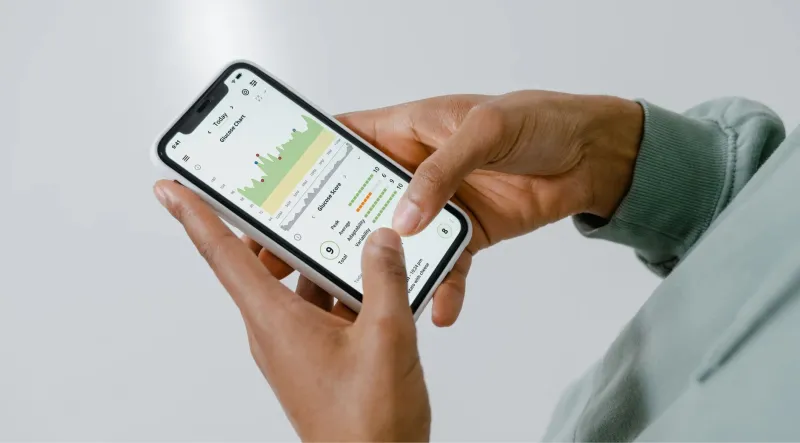
Consider a common scenario: a patient managing Type 2 diabetes uses a continuous glucose monitor that feeds data into one app, a pharmacy portal to request refills through another, a telehealth platform to consult with a physician through a third, and a general wellness app to log diet and exercise through a fourth. None of these systems automatically shares information with the others. The physician prescribing a new medication may have no visibility into what the pharmacy has already dispensed. The pharmacy may be unaware of supplements the patient is tracking in a wellness app. The medication reminder tool has no connection to the clinical record that would flag a dangerous drug interaction.
These are not hypothetical edge cases. Research published in peer-reviewed journals and reports from patient safety organizations have documented that medication errors — including duplicate prescriptions, missed interactions, and incorrect dosing — are among the most preventable yet persistently common adverse events in American healthcare. Fragmented digital infrastructure is a significant contributing factor.
Why the Silos Exist
The barriers preventing seamless medication data integration are layered, and no single stakeholder bears sole responsibility for the current state of affairs.
Regulatory complexity plays a central role. Prescription data is subject to overlapping privacy frameworks, including the Health Insurance Portability and Accountability Act (HIPAA) and, in some states, additional pharmaceutical privacy statutes. While these protections exist for legitimate reasons, their interpretation has historically been conservative, discouraging the kind of open data exchange that would enable medication apps to pull from pharmacy benefit managers or electronic health records in real time.
Technical incompatibility compounds the regulatory challenge. Pharmacy management systems, many of which were built decades ago and have been updated incrementally rather than redesigned, use proprietary data formats that do not conform to modern interoperability standards such as HL7 FHIR (Fast Healthcare Interoperability Resources). Health apps built on contemporary APIs cannot easily communicate with legacy pharmacy infrastructure without costly custom integrations that most developers lack the resources to build.
Business incentives further entrench the status quo. Large pharmacy chains and pharmacy benefit managers have invested heavily in their own patient-facing digital tools. Sharing medication data with third-party applications would, in their view, reduce patient engagement with proprietary platforms and potentially diminish a competitive advantage. The result is that patients are actively encouraged to remain within walled gardens rather than benefit from a connected ecosystem.
The Interaction Problem No App Is Solving
Perhaps the most clinically significant consequence of medication app fragmentation is the persistent failure to flag drug interactions comprehensively. A pharmacist dispensing a new prescription can theoretically check against a patient's medication history — but only if that history is complete and current within the pharmacy's own system. Medications filled at a different pharmacy, samples provided by a physician's office, or over-the-counter drugs and supplements tracked in a wellness app are invisible to that check.
Some medication management apps offer interaction-checking features, but these tools are only as accurate as the data the patient manually enters. Studies examining patient-reported medication lists consistently find significant discrepancies when compared against clinical records. People forget, misremember, or simply do not know the generic names of the drugs they take. An app that depends entirely on self-reported data cannot reliably protect against the interactions it was ostensibly designed to catch.
The consequences of missed interactions range from reduced therapeutic effectiveness to life-threatening complications. Older adults, who are disproportionately likely to take multiple medications simultaneously — a condition known as polypharmacy — face the greatest risk. Yet this population is also among those least likely to be seamlessly navigating multiple health apps to cross-reference their own prescriptions.
What a Connected System Could Look Like
The infrastructure for meaningful improvement exists, at least in theory. The 21st Century Cures Act and subsequent federal interoperability rules have pushed healthcare organizations toward greater data sharing, and FHIR-based APIs are increasingly common in hospital systems and electronic health record platforms. Some forward-thinking health technology companies have begun building medication management tools that can pull prescription data directly from participating pharmacies or insurers, reducing the burden on patients to enter information manually.
Several telehealth platforms have also started integrating prescribing, pharmacy routing, and medication tracking into unified patient experiences. For patients who receive care entirely within one of these integrated ecosystems, the fragmentation problem is substantially reduced. The challenge is that most Americans do not receive all of their care from a single provider or platform, and the interoperability gains achieved within closed systems do not automatically extend to the broader healthcare landscape.
Advocates within the digital health community have called for pharmacy benefit managers to be required to share medication history data through standardized APIs, similar to obligations that now apply to payers under federal rules. Such a mandate would not resolve every technical or business barrier, but it would represent a meaningful shift in the regulatory presumption toward openness.
The Patient Burden Should Not Be This Heavy
In the current environment, the patient bears a disproportionate share of the cognitive and logistical labor required to keep their medication information coherent across platforms. They are expected to remember to update multiple apps, reconcile discrepancies between what one system shows and what another has dispensed, and somehow identify interactions that no single tool has complete information to detect.
This is not a reasonable standard. Mobile health technology has demonstrated, in many domains, that it can reduce burden, improve adherence, and support better clinical outcomes when it is designed thoughtfully and integrated effectively. Medication management is one area where the gap between that potential and the current reality is both wide and consequential.
Closing that gap will require coordinated action from regulators, pharmacy systems, health technology developers, and payers. It will also require a recognition, long overdue, that a health app ecosystem that cannot reliably communicate about something as fundamental as what medications a patient is taking is not yet the system patients deserve.