When the Algorithm Says You're Fine: The Hidden Dangers of Trusting Symptom-Checker Apps Over Clinical Judgment
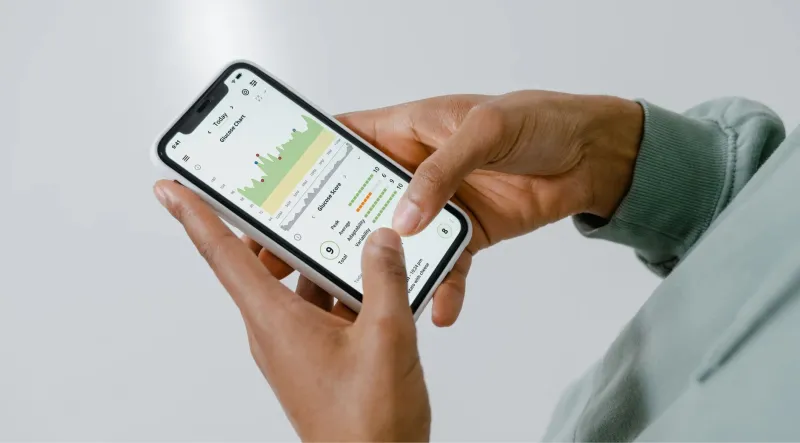
For many Americans, the sequence has become reflexive: feel unwell, reach for a smartphone, open a symptom checker, and wait for the algorithm to deliver a verdict. The appeal is understandable. These tools are free, immediate, and available at two in the morning when no physician's office is open. Yet the reassurance they offer — or the alarm they occasionally sound — is built on a foundation that clinicians increasingly describe as structurally inadequate for the complexity of human illness.
The gap between what symptom-checking applications can assess and what a clinical interview actually captures is not a matter of software sophistication. It is a matter of fundamental epistemology: the difference between what a patient can report through a series of dropdown menus and what a skilled clinician can observe, interpret, and probe through direct conversation.
The Illusion of Systematic Thoroughness
Symptom-checker applications typically operate through branching logic or, in more advanced iterations, machine learning models trained on large patient datasets. A user reports a headache, answers follow-up questions about duration and severity, and receives a ranked list of possible explanations. The interface feels methodical. It mimics the structured quality of clinical reasoning without replicating the substance of it.
What these tools cannot do is notice. A physician conducting a clinical interview observes the patient's affect, posture, the hesitation before answering a particular question, the subtle pallor that doesn't appear in a photograph. They ask follow-up questions that aren't preprogrammed because the patient's phrasing suggested something worth pursuing. They integrate social history, family history, current medications, and recent life stressors in real time, adjusting the diagnostic pathway accordingly.
Research published in peer-reviewed journals has consistently found that leading symptom-checking platforms list the correct diagnosis among their top results only a fraction of the time, with accuracy rates in some studies falling below fifty percent for conditions that ultimately required urgent care. More troubling, the tools tend to perform worst precisely when accuracy matters most — in presentations that are atypical, in patients with multiple concurrent conditions, and in cases where the chief complaint masks a more serious underlying process.
Algorithm Reliance and the Psychology of False Closure
Beyond the technical limitations lies a behavioral phenomenon that clinicians and health psychologists have begun to study in earnest: algorithm reliance, the cognitive tendency to treat a digital output as definitive simply because it was produced by a system rather than a person.
When a symptom checker returns a low-acuity result — tension headache rather than hypertensive crisis, acid reflux rather than cardiac event — users frequently experience what researchers describe as premature closure. The psychological need for an explanation has been satisfied, and the motivation to seek further evaluation diminishes accordingly. Days pass. Symptoms persist or worsen. The original digital verdict, however, has already anchored the patient's interpretation of their own experience.
This dynamic is particularly pronounced in populations that already face structural barriers to healthcare access. For patients without insurance, those in rural areas with limited provider availability, or individuals who have historically encountered dismissiveness in clinical settings, the symptom checker can become not a bridge to care but a substitute for it. The app's reassurance provides cover for avoidance that was, in some cases, already motivated by cost, time, or past trauma.
When These Tools Cause Active Harm
The concern is not hypothetical. Emergency physicians across the United States have documented cases in which patients delayed presentation for conditions including stroke, pulmonary embolism, appendicitis, and myocardial infarction after receiving benign or low-urgency assessments from digital triage tools. In each of these scenarios, time is not a neutral variable. The window for effective intervention narrows with every hour, and outcomes worsen measurably.
On the opposite end of the spectrum, symptom checkers have also contributed to patterns of over-medicalization. Tools that err toward caution — recommending emergency department visits for presentations that could be safely managed with rest and observation — drive unnecessary utilization, expose patients to the risks inherent in hospital environments, and contribute to the systemic overcrowding that degrades care for genuinely critical patients.
Neither failure mode is trivial. Both represent real harm that flows directly from the misapplication of a digital tool to a decision that requires human clinical judgment.
Where Digital Triage Genuinely Adds Value
None of this suggests that symptom-checking applications are without merit. Used appropriately, they serve a legitimate and useful function in the healthcare ecosystem. They can help patients organize their thinking before a clinical encounter, prompting them to articulate symptoms they might otherwise forget to mention. They can provide general health education that contextualizes a symptom within a range of possibilities. And in environments where telemedicine is available — as it increasingly is through platforms that connect patients with licensed clinicians in real time — they can serve as an efficient intake mechanism that routes individuals toward appropriate levels of care.
The critical distinction is between using these tools as an informational resource and using them as a diagnostic authority. A symptom checker that helps a patient decide whether to schedule a telehealth appointment within the next few hours or drive to an urgent care center is functioning appropriately. A symptom checker that replaces that appointment entirely is not.
Telemedicine platforms that integrate symptom-checking functionality with direct clinician access represent a more defensible model. In these configurations, the algorithm performs preliminary triage, but a licensed provider reviews the output and conducts a real clinical interview before any guidance is offered. The technology serves the clinician rather than replacing them.
Practical Guidance for Patients Navigating Digital Triage
For patients who rely on digital tools as part of their health decision-making — and most Americans now do — a few principles can reduce the risk of algorithm-driven harm.
First, treat any symptom-checker result as a starting point for inquiry, not a conclusion. The appropriate response to a digital triage output is a question: does this warrant speaking with a clinician? In most cases where the concern is significant enough to prompt the search, the answer is yes.
Second, recognize the symptoms that should always trigger immediate professional evaluation regardless of what any application indicates. Chest pain, difficulty breathing, sudden severe headache, one-sided weakness or facial drooping, and high fever accompanied by stiff neck are among the presentations where digital tools should be bypassed entirely in favor of emergency services.
Third, use telehealth as the bridge it was designed to be. A virtual visit with a licensed clinician takes roughly the same amount of time as a thorough symptom-checker interaction and delivers something the algorithm cannot: a professional capable of recognizing what you haven't thought to mention.
The Limits of the Interface
The smartphone has genuinely transformed the relationship between patients and health information. Access to credible medical knowledge, the ability to monitor chronic conditions in real time, and the convenience of telehealth have each improved outcomes in measurable ways. The technology, deployed thoughtfully, represents a meaningful advance.
But the clinical interview — the unhurried conversation between a patient and a trained observer — remains irreplaceable not because medicine has failed to innovate, but because illness is lived in a body that no algorithm has yet learned to fully read. The symptom checker on your phone is a useful tool. It is not a diagnostician. Knowing the difference may, on any given day, be the most consequential health decision you make.