Always Watching, Often Worrying: How Constant Health App Alerts Are Fueling a New Wave of Digital Anxiety
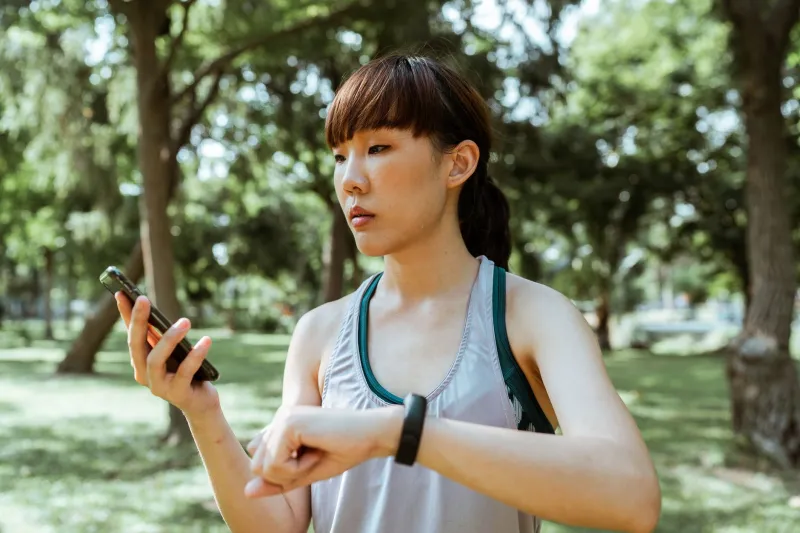
The promise was straightforward enough. Strap a device to your wrist, download an app, and gain unprecedented visibility into your own body. Heart rate, sleep stages, blood oxygen saturation, stress scores, step counts, caloric burn — all of it delivered in real time, directly to your phone. For millions of Americans, this kind of continuous self-monitoring has become as routine as brushing teeth.
But something unexpected has emerged alongside the data: a pervasive, low-grade anxiety that many clinicians are only beginning to name. Patients are arriving at primary care offices and emergency departments clutching screenshots of heart rate graphs. They are losing sleep — ironically — over poor sleep scores. They are canceling workouts because their recovery index suggests their body isn't ready. And they are, in growing numbers, seeking medical reassurance for alerts that, in the vast majority of cases, reflect normal physiological variation rather than genuine pathology.
The phenomenon has acquired an informal label in behavioral health circles: digital hypochondria. And its relationship to mobile health technology is both direct and deeply uncomfortable for an industry built on the premise that more information leads to better health.
The Architecture of Alarm
To understand why this is happening, it helps to examine how health app notifications are engineered. Most consumer-grade wearables and health platforms are designed around engagement metrics — a reality that occasionally conflicts with clinical best practice. Alerts are frequent, often dramatized in their language, and calibrated to capture attention rather than to reflect clinical urgency.
An Apple Watch, for instance, may notify a user of a heart rate above 120 beats per minute during a period of apparent inactivity — a threshold that sounds alarming but can be triggered by something as mundane as standing up quickly after sitting for an extended period, consuming caffeine, or experiencing mild emotional stress. Fitbit's sleep tracking may assign a user a score in the low 60s and frame it as "poor," even when the underlying data reflects a single night of restless sleep entirely consistent with normal adult variation.
The language of these notifications borrows from clinical vocabulary without carrying clinical context. Words like "irregular," "abnormal," and "below average" activate cognitive alarm systems in ways that neutral descriptors would not. And because the alerts arrive persistently — sometimes dozens of times per day across a suite of health apps — users are effectively trained to maintain a state of low-level physiological vigilance.
"What we're seeing is a kind of operant conditioning," says one behavioral health specialist who works with patients experiencing health anxiety. "The app pings. The user checks. The checking behavior is reinforced. Over time, the threshold for alarm gets lower and lower, and the patient becomes increasingly sensitized to bodily sensations that they would previously have ignored entirely."
From Notification to Unnecessary Care
The downstream effects on the healthcare system are beginning to attract serious attention. A 2023 analysis published in the Annals of Internal Medicine found that Apple Watch-generated ECG notifications contributed to a significant increase in cardiology referrals for atrial fibrillation screening — the majority of which revealed no clinically significant findings. Emergency physicians at large urban medical centers have reported a measurable uptick in visits from patients presenting with wearable-generated alerts as their primary concern.
This is not a trivial issue. Unnecessary medical visits carry real costs — financial, temporal, and psychological. A patient who spends an afternoon in an urgent care clinic after receiving a heart rate alert, only to be reassured and discharged, has not been well-served by their technology. In some cases, the clinical workup itself — blood draws, ECGs, referrals — can amplify rather than resolve anxiety, creating a cycle that is difficult to interrupt.
For patients with pre-existing health anxiety or obsessive-compulsive tendencies, the consequences can be more severe. Behavioral health professionals report seeing patients who check their health app data dozens of times per hour, who are unable to sleep without reviewing their overnight metrics, or who experience acute distress when their device battery dies and the monitoring is interrupted.
"The device becomes a safety behavior," explains a licensed clinical psychologist specializing in anxiety disorders. "And like all safety behaviors, it provides short-term relief at the cost of long-term habituation. The patient never learns that they can tolerate uncertainty about their body. The app is always there to check, and so the anxiety is never truly confronted."
Distinguishing Signal from Noise
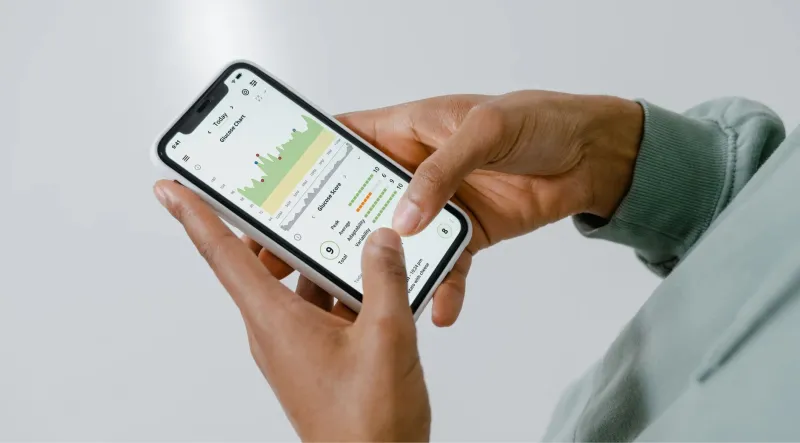
None of this is to suggest that health wearables are without genuine clinical value. The evidence base for continuous monitoring in specific populations — patients with known cardiac arrhythmias, individuals managing type 2 diabetes with continuous glucose monitors, or older adults at elevated fall risk — is substantive and growing. The challenge lies in the indiscriminate application of monitoring technology to the general population, without corresponding infrastructure for clinical interpretation.
Most consumer health apps operate in a regulatory gray zone. They are not classified as medical devices, their algorithms are proprietary, and their notification thresholds are not standardized against clinical guidelines. A user receiving an atrial fibrillation notification from their smartwatch has no immediate mechanism for determining whether that alert reflects a true arrhythmia, a motion artifact, or an algorithm quirk — and their primary care physician may have no protocol for triaging such alerts when they arrive via patient message.
Some healthcare systems have begun developing frameworks to address this gap. Certain large integrated health networks now offer "digital health navigation" services — clinician-staffed channels through which patients can submit wearable data for rapid review and triage. Telehealth platforms have begun incorporating structured intake pathways specifically for wearable-generated concerns, allowing a clinician to contextualize an alert before it escalates to an in-person visit.
These are promising developments, but they remain exceptions rather than standards.
Rethinking the Notification Model
The most durable solution may require changes at the platform level. A growing coalition of clinicians and patient advocates is calling on device manufacturers and app developers to adopt more conservative notification thresholds, plain-language contextualizing statements that accompany alerts, and opt-in rather than opt-out alert architectures. The argument is not that users should receive less data, but that data should be delivered in ways that reduce rather than amplify unnecessary alarm.
Some researchers have proposed a tiered notification model in which alerts are stratified by clinical urgency — a persistent, high-confidence arrhythmia detection treated differently from a single elevated heart rate reading, for instance. Others advocate for built-in friction: a brief delay before an alert is delivered, during which the algorithm continues to assess whether the signal is sustained, reducing the proportion of transient anomalies that ever reach the user's screen.
For individual users navigating the current landscape, behavioral health experts offer a consistent recommendation: establish intentional limits around health data review. Check metrics at scheduled intervals rather than continuously. Discuss notification settings with a primary care provider. And treat persistent health anxiety — regardless of its technological trigger — as a clinical concern worthy of professional support.
The body has always generated ambiguous signals. What has changed is the infrastructure now dedicated to amplifying them. Mobile health technology carries genuine promise for improving outcomes and extending care to underserved populations. Realizing that promise, however, will require an honest reckoning with the ways in which the tools designed to reassure us have, for a meaningful segment of users, begun to do precisely the opposite.