Engineered Urgency: When Your Wellness App Is Built to Keep You Coming Back
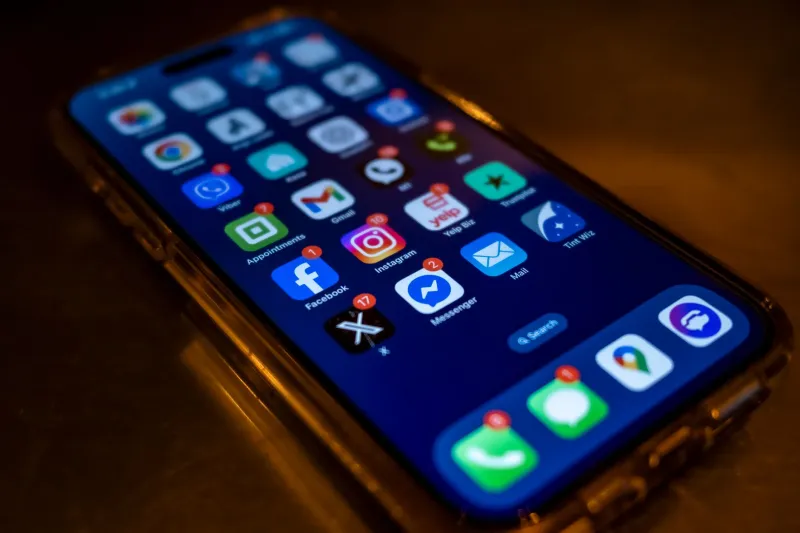
The notification arrives in the dark. Your phone screen illuminates the ceiling, and the message is brief but pointed: You're 200 steps away from your daily goal. Don't break your streak. It is 11:52 p.m. You are already in bed.
This is not an accident. It is design.
The behavioral mechanics embedded in consumer health and wellness applications — push notifications, streak counters, achievement badges, social leaderboards, and real-time biometric alerts — are not incidental features. They are deliberate architectural choices, borrowed from the same playbook that shaped social media platforms and mobile gaming. In the wellness context, these mechanics are often presented as motivational tools. A growing body of research, and a widening circle of critics, suggests the picture is considerably more complicated.
The Engagement Economy Comes to Healthcare
Digital health applications occupy a peculiar space in the consumer technology landscape. They are simultaneously wellness products and software products, subject to the commercial pressures that govern both. Like any app competing for screen time in a crowded marketplace, a health app that users open infrequently is an app that struggles to retain subscribers, attract advertisers, and justify its valuation.
This creates an incentive structure that does not always align with clinical outcomes. An app designed to maximize daily active users will favor features that generate habitual engagement — not necessarily features that generate lasting behavior change. The two goals can overlap, but they are not the same thing, and when they diverge, the commercial logic tends to win.
Dr. B.J. Fogg, a behavioral scientist at Stanford whose work on persuasive technology has been widely cited in Silicon Valley, has himself expressed concern that the techniques he helped develop have been applied in ways that prioritize engagement over genuine human benefit. The wellness app industry has absorbed these techniques wholesale.
What the Research Actually Shows
The evidence on whether gamified health apps improve clinical outcomes is, at best, mixed. Studies examining step-counting apps, calorie trackers, and medication adherence platforms have found that engagement metrics — daily logins, streaks maintained, badges earned — frequently do not correlate with sustained health improvements.
A 2022 review published in JMIR mHealth and uHealth found that while gamification elements consistently increased short-term app engagement, the evidence for long-term behavior change was weak. More troubling, some research has found that the removal of external rewards — when a streak ends or a challenge period concludes — can trigger a rebound effect in which users abandon the behavior entirely, having never internalized the underlying motivation.
For patients managing chronic conditions, this dynamic carries real clinical risk. A person with Type 2 diabetes who relies on a gamified glucose-tracking app may maintain consistent logging behavior as long as the app's reward mechanics remain salient. When that engagement fades — as it reliably does — the monitoring habit may fade with it.
The Anxiety Architecture
Beyond gamification, the notification design of many health apps raises separate concerns about psychological burden. Real-time health monitoring, enabled by wearables and connected devices, has created a class of applications that deliver a continuous stream of biometric data — heart rate variability, sleep stage breakdowns, blood oxygen readings, stress scores — along with alerts when those metrics deviate from established ranges.
For some users, this information is clinically actionable and genuinely reassuring. For others, it produces a phenomenon that researchers have begun to describe as health anxiety amplification — a state in which constant monitoring generates a heightened sensitivity to bodily variation that increases distress rather than reducing it.
A 2023 study from the University of California, San Francisco, examining users of continuous glucose monitors found that a subset of non-diabetic users who adopted the devices for general wellness purposes reported elevated anxiety about glucose fluctuations that fell well within normal physiological ranges. The data was accurate. The interpretive framework provided by the app was not calibrated to their actual clinical needs.
Midnight notifications, in this context, are not merely inconvenient. They are potentially harmful — interrupting sleep, one of the most evidence-supported pillars of physical and mental health, in the name of optimizing it.
What Ethical Design Looks Like
Not all digital health developers have ignored these concerns. A growing movement within the industry, loosely organized under the banner of "humane technology" and supported by organizations such as the Center for Humane Technology, advocates for design standards that prioritize user wellbeing over engagement metrics.
In practical terms, ethical health app design involves several concrete commitments. Notification timing should be configurable and default to reasonable hours rather than optimized for click-through rates. Streak mechanics, if present, should be designed to reduce anxiety about interruption rather than amplify it — some apps now offer "streak freezes" or reframe streaks around weekly rather than daily consistency. Data presentations should include contextual guidance that helps users interpret readings accurately rather than reactively.
Perhaps most importantly, ethical digital health tools should be transparent about their engagement mechanics. Users deserve to know whether the urgency they feel when opening a health app is a genuine clinical prompt or a manufactured behavioral cue.
What Users Should Demand
For Americans navigating an increasingly crowded marketplace of wellness applications, a few evaluative questions are worth asking before granting an app persistent access to notifications and biometric data.
First: does this app cite peer-reviewed evidence for its behavioral approach, or does it rely on vague claims about motivation and habit formation? Reputable digital health tools are increasingly publishing their clinical validation data. Second: does the app offer meaningful control over notification frequency and timing, or does it default to maximum engagement? Third: does the app provide interpretive context for health data, or does it surface raw numbers without clinical framing?
The most trustworthy digital health platforms are those that treat engagement as a means to a health outcome, not as an end in itself. When an app's success is measured in the same terms as a social media platform — daily active users, session length, notification open rates — the health objective has already been subordinated to something else.
Designing for Health, Not Habit
The potential of digital health tools to support genuine wellness is substantial. Remote monitoring, personalized feedback, and intelligent reminders have documented roles in improving medication adherence, supporting weight management, and facilitating chronic disease management. None of that potential requires midnight notifications or anxiety-inducing streaks.
The question worth asking is not whether your health app is engaging. It is whether it is helping. Those two things should be the same. Too often, they are not.