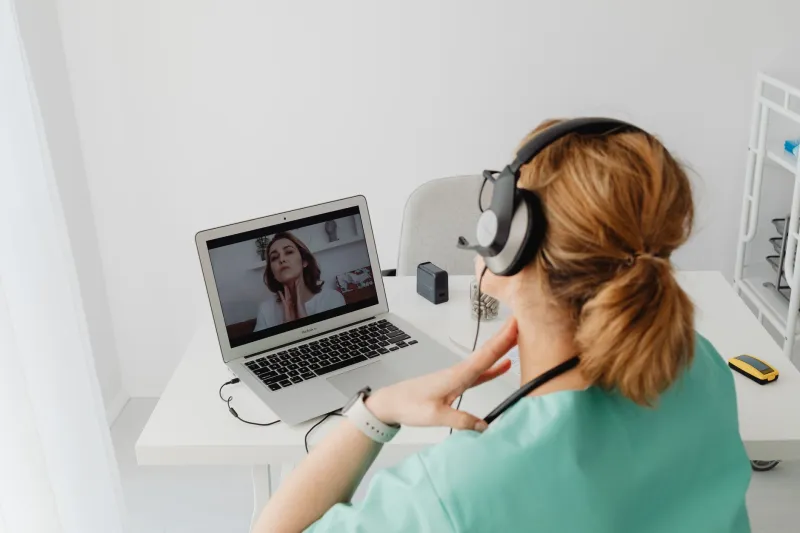
From Pocket to Patient: How FDA-Cleared Apps Are Redefining Chronic Care Management

Not long ago, the idea of receiving meaningful medical guidance from a smartphone application would have seemed like science fiction. Today, it is becoming standard practice. Across the United States, millions of patients are turning to FDA-cleared mobile health (mHealth) applications to monitor chronic conditions, support mental wellness, and prevent disease — often without setting foot in a clinic. The implications for healthcare delivery are profound, and the pace of change is accelerating.
At mHealthSystem, we track this transformation closely. What follows is a detailed look at five critical ways clinically validated apps are earning a legitimate place in the American healthcare ecosystem — along with honest guidance on how to separate genuinely useful tools from the noise.
1. Continuous Glucose Monitoring Meets Clinical Intelligence
For the more than 37 million Americans living with diabetes, the integration of continuous glucose monitoring (CGM) devices with FDA-cleared smartphone applications has been transformative. Apps such as Dexcom G7's companion platform and Abbott's LibreLink do far more than display blood sugar readings — they analyze trends, issue predictive alerts, and transmit data directly to care teams in real time.
The clinical validation behind these tools is substantial. Studies published in peer-reviewed journals have demonstrated measurable reductions in HbA1c levels among patients who actively use CGM-integrated apps compared to those relying on traditional fingerstick monitoring alone. The result is not merely convenience — it is demonstrably improved glycemic control.
For patients evaluating these options, the key question is whether the application carries FDA 510(k) clearance or De Novo authorization. This designation signals that the tool has undergone rigorous review and meets established safety and efficacy standards — a meaningful distinction in a marketplace crowded with unvalidated alternatives.
2. Prescription Digital Therapeutics for Mental Health
Perhaps no area of mHealth has generated more discussion — or more cautious optimism — than prescription digital therapeutics (PDTs) for behavioral health. Products such as Pear Therapeutics' reSET and Freespira's FDA-authorized PTSD treatment platform represent a category that sits at the intersection of software engineering and clinical medicine.
These are not meditation apps or mood journals. They are software-based interventions that have been evaluated in randomized controlled trials and approved by the FDA as adjunct or standalone treatments for specific diagnoses. Freespira, for instance, delivers a 28-day breathing-based protocol for panic disorder and PTSD that has shown clinically significant symptom reduction in independent studies.
The practical implication for patients is significant: access to evidence-based mental health treatment is no longer contingent on finding an available therapist or navigating insurance coverage for in-person sessions. However, clinicians and patients alike should approach this category with appropriate scrutiny. PDTs require a prescription from a licensed provider, and not all platforms claiming therapeutic benefit carry the regulatory backing to justify that claim.
3. Cardiac Monitoring Through Consumer Devices
The Apple Watch's ability to generate an electrocardiogram (ECG) readable by a cardiologist was cleared by the FDA in 2018, and the ripple effects continue to be felt across cardiology practices nationwide. Atrial fibrillation — a condition affecting more than 6 million Americans and carrying significant stroke risk — can now be flagged during an ordinary Tuesday afternoon.
AliveCor's KardiaMobile device and its accompanying app represent another compelling example. Cleared for six-lead ECG recording, the platform allows patients to capture cardiac data during symptomatic episodes that might otherwise be missed during a standard 12-lead ECG performed in a clinical setting. Several published case reports document instances where KardiaMobile recordings led directly to life-saving interventions.
For patients with known cardiac conditions or risk factors, discussing these tools with a cardiologist is a reasonable next step. The data these applications generate can meaningfully inform clinical decision-making — provided it is interpreted within the appropriate medical context.
4. Remote Patient Monitoring for Hypertension and Heart Failure
Hypertension affects nearly half of all American adults, yet blood pressure control rates remain stubbornly low. A growing body of evidence supports the use of FDA-cleared remote patient monitoring (RPM) platforms to address this gap. These systems pair validated home blood pressure cuffs with smartphone applications that transmit readings automatically to a patient's care team, triggering clinical outreach when values fall outside target ranges.
Platforms such as Withings' RPM ecosystem and Omron's connected health suite have demonstrated meaningful improvements in blood pressure control in real-world deployments. The Centers for Medicare and Medicaid Services (CMS) now reimburses qualifying RPM services under specific CPT codes, reflecting the federal government's recognition of their clinical utility.
For patients enrolled in RPM programs, the practical experience is relatively straightforward: take your blood pressure at home, allow the app to transmit the reading, and expect a call from your care team if something warrants attention. The technology handles the complexity; the patient simply has to show up consistently.
5. AI-Assisted Dermatology and Early Skin Cancer Detection
Dermatology has emerged as one of the most active frontiers in clinical mHealth. Applications leveraging artificial intelligence to analyze photographs of skin lesions — including tools developed by DermTech and SkinVision — are drawing serious attention from both dermatologists and primary care providers.
SkinVision, for example, uses machine learning algorithms trained on millions of clinical images to classify lesion risk and recommend whether a patient should seek an in-person evaluation. The platform has received CE marking in Europe and is undergoing regulatory review processes in the United States. While it does not yet carry full FDA clearance as a diagnostic device, the underlying technology has been validated in peer-reviewed research against dermatologist assessments.
The appropriate use case here is supplemental screening, not definitive diagnosis. Patients with personal or family histories of melanoma, or those with significant sun exposure histories, may find these tools valuable as a first-pass triage mechanism — a way to prioritize which lesions warrant urgent attention.
What to Look for Before You Download
The enthusiasm surrounding clinical mHealth apps is warranted, but so is a degree of discernment. The Apple App Store and Google Play host thousands of applications making health-related claims, the vast majority of which have never been evaluated by the FDA or subjected to peer-reviewed clinical testing.
When evaluating any mHealth application for clinical use, consider the following: Does the app carry FDA clearance or authorization? Has it been studied in randomized controlled trials? Is the data it collects shared with your healthcare provider? Is the company transparent about its data privacy practices under HIPAA?
The answers to these questions will quickly separate the tools that belong in a patient's healthcare toolkit from those that belong in the entertainment category.
The Road Ahead
The smartphone in your pocket is not replacing your physician. What it is doing — when paired with the right, rigorously validated applications — is extending the reach of clinical care into the spaces between appointments, enabling earlier detection, supporting better adherence, and generating the kind of longitudinal data that episodic clinic visits simply cannot capture.
At mHealthSystem, we believe the future of healthcare is mobile, data-driven, and patient-centered. The tools examined here represent the leading edge of that future. Used thoughtfully, in partnership with qualified healthcare providers, they have the potential to meaningfully improve outcomes for millions of Americans.