Too Many Apps, Too Little Health: How Digital Overload Is Undermining the Promise of Mobile Wellness
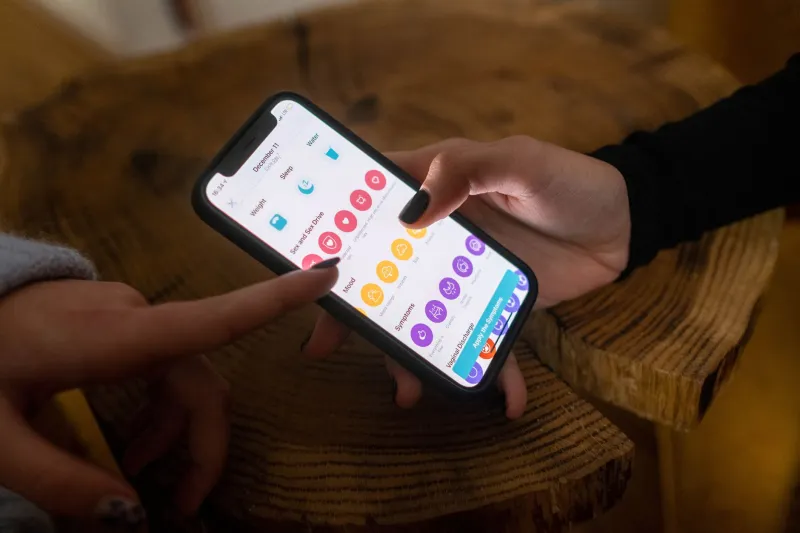
Walk through the health and fitness section of any major app store, and the abundance is staggering. There are apps for tracking sleep, apps for logging meals, apps for monitoring heart rate variability, apps for guided meditation, apps for medication reminders, apps for chronic pain journaling, and apps that claim to do all of the above simultaneously. For the average American smartphone user, the result is not better health—it is a cluttered home screen and a growing sense of guilt about tools they downloaded with the best intentions and rarely open anymore.
This is not a fringe phenomenon. Research from Pew Research Center consistently finds that Americans are among the most active adopters of health technology globally, yet studies published in journals including npj Digital Medicine and JMIR mHealth and uHealth reveal that app abandonment rates within the first thirty days of download routinely exceed sixty percent. One frequently cited industry analysis found that the median health app loses nearly eighty percent of its daily active users within two weeks of installation. The apps are being acquired. They are not being used.
The Point-Solution Problem
The architecture of the modern health app market is largely responsible for this dynamic. Rather than building integrated platforms that address health holistically, developers have historically gravitated toward what the industry calls point solutions—narrow, single-function tools designed to solve one problem in isolation. A diabetes management app tracks blood glucose but does not communicate with the nutrition tracker on the same phone. A mental health platform delivers cognitive behavioral therapy exercises but has no awareness of the sleep deprivation data sitting in a wearable three inches away.
For a patient managing multiple chronic conditions—a profile that describes roughly sixty percent of American adults, according to the Centers for Disease Control and Prevention—this fragmentation translates into an exhausting administrative burden. Logging a single day of health data across disparate apps can require ten or more separate interactions, each demanding a different interface, a different login, and a different mental framework. Behavioral economists refer to the downstream consequence as decision fatigue: the measurable decline in the quality of choices people make after a prolonged series of cognitive demands. Applied to health management, the result is predictable. Users disengage.
When More Becomes Less
The psychological literature on choice overload offers a useful framework for understanding what happens when wellness tools multiply without limit. Psychologist Barry Schwartz, whose foundational work on the paradox of choice demonstrated that an abundance of options frequently produces anxiety and inaction rather than satisfaction, described a dynamic that maps almost perfectly onto the digital health space. When every health metric is trackable and every trackable metric has its own dedicated application, the cumulative effect is paralysis rather than empowerment.
Clinicians working in digital health are observing this pattern in practice. Patients who arrive at telemedicine appointments with multiple health apps installed are not necessarily better informed than those who use one or two tools consistently. In many cases, they are more confused. Data collected across non-communicating platforms tells contradictory stories. A fitness tracker may report adequate activity levels while a separate app flags nutritional deficiencies that explain persistent fatigue. Without a unified view, neither data point reaches its full clinical value, and the patient is left to reconcile conflicting signals without professional guidance.
Abandonment Is Not Failure—It Is Feedback
The industry's tendency to frame high abandonment rates as a user engagement problem may be obscuring a more instructive interpretation. When the majority of people stop using a health app within weeks of downloading it, that is not simply a marketing or onboarding challenge. It is a signal that the product failed to integrate meaningfully into the rhythms of daily life.
Health behavior research is clear on one point: sustainable engagement requires that a tool reduce friction, not add it. Apps that demand daily manual data entry, that send notification floods at clinically irrelevant intervals, or that present dashboards of metrics without contextual explanation are not supporting health behavior change. They are performing the appearance of it. Users who abandon these tools are not demonstrating a lack of commitment to their health. They are making a rational decision to protect their cognitive resources.
This reframing has significant implications for how digital health platforms should be designed and evaluated. The relevant metric is not download volume or even monthly active users in the aggregate. It is whether the people who most need these tools—those managing complex, chronic, or behavioral health conditions—are sustaining meaningful engagement over clinically relevant time horizons.
The Case for Consolidation
A growing cohort of health technology researchers and platform designers is advancing a counterintuitive argument: the most effective mobile health intervention may not be the most feature-rich one. Studies examining app-based chronic disease management have found that simplified interfaces, reduced notification frequency, and tighter integration with existing clinical workflows consistently outperform more elaborate systems on long-term adherence metrics.
The implications for the broader mHealth ecosystem are significant. Integrated platforms that aggregate data from multiple sources—wearables, pharmacy records, electronic health records, and user-entered information—into a single, intelligible interface represent a meaningfully different paradigm than the current market of competing point solutions. Rather than asking patients to become the connective tissue between disconnected tools, these platforms accept that cognitive burden on behalf of the user and surface only the insights that are actionable.
Some of the most compelling evidence for this approach comes from remote patient monitoring programs, where patients managing conditions such as hypertension or heart failure show substantially better outcomes when enrolled in coordinated digital care programs than when left to self-assemble a toolkit from the app store. The difference is not the sophistication of the technology. It is the presence of structure, clinical integration, and a defined pathway from data to decision.
What Patients—and Clinicians—Can Do Now
While the market matures toward more integrated solutions, both patients and the clinicians who serve them can take practical steps to reduce digital health overload.
For patients, an audit of currently installed health apps is a reasonable starting point. Identifying which tools are used consistently, which generate data that has ever informed a clinical conversation, and which were downloaded impulsively and never opened can clarify where to focus attention. Fewer tools used with intention will almost always outperform a larger collection used sporadically.
For clinicians operating in telehealth and digital care environments, the recommendation calculus deserves closer scrutiny. Prescribing an app without assessing what a patient is already using—and whether the addition creates redundancy or conflict—risks contributing to the very overload that undermines engagement. A brief inventory of a patient's existing digital health tools, incorporated into intake or follow-up workflows, costs little and may prevent the kind of fragmented, confusing data environment that erodes both trust and adherence.
A Simpler Promise
The original promise of mobile health technology was compelling precisely because it was straightforward: put clinically useful tools in people's hands, wherever they are, and improve access to care. That promise has not been broken, but it has been complicated by a market that optimized for volume over coherence.
Restoring the clarity of that original vision requires acknowledging what the abandonment data has been communicating for years. Americans do not need forty-seven health apps. They need fewer, better-integrated tools that fit into their lives without demanding that their lives reorganize around them. The path toward better digital health outcomes runs not through the app store, but through a more disciplined understanding of what technology is actually for.