Stuck in 1992: Why Hospitals Still Rely on Fax Machines While AI Rewrites Medicine
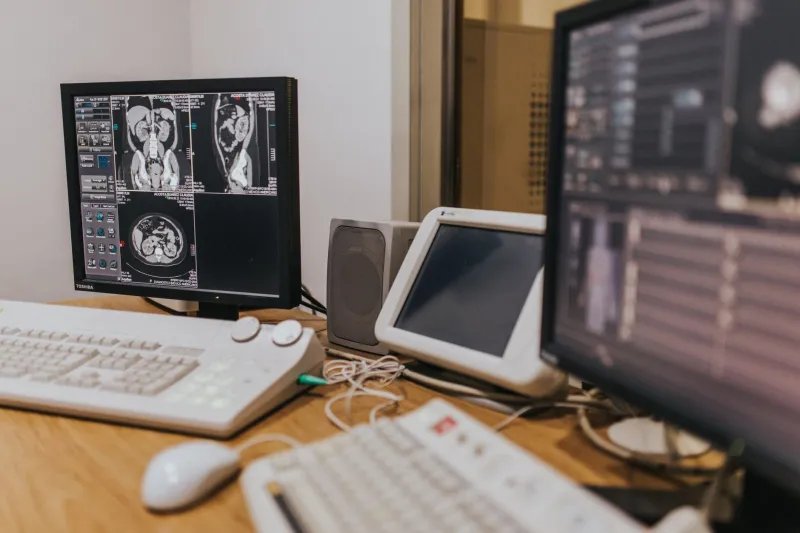
On any given weekday morning, a cardiologist in suburban Ohio might use an AI-powered diagnostic tool to flag an arrhythmia pattern in a patient's wearable data — then turn around and fax that patient's referral notes to a specialist across town. The juxtaposition is jarring, but it is not unusual. Across the United States, cutting-edge digital health platforms coexist with communication infrastructure that predates the commercial internet. Understanding why requires looking beyond technology and into the entangled web of regulation, financial incentive, and organizational inertia that governs American healthcare.
A Gap That Shouldn't Exist
The theoretical case for interoperability — the seamless exchange of patient data between disparate systems — has been settled for years. Federal mandates under the 21st Century Cures Act, expanded rules from the Office of the National Coordinator for Health Information Technology (ONC), and the Centers for Medicare and Medicaid Services' push for FHIR-based application programming interfaces have all been designed, in part, to eliminate the data silos that fragment patient care. Billions of dollars in federal incentives flowed through the HITECH Act to accelerate electronic health record (EHR) adoption. By most measures, adoption succeeded: as of the most recent federal reporting, over 96 percent of non-federal acute care hospitals operate a certified EHR system.
And yet the fax machine endures.
A 2022 survey conducted by the American Hospital Association found that a substantial portion of care coordination still relies on fax and telephone, even among institutions with mature EHR deployments. The reason is not ignorance. Clinicians and administrators are acutely aware that better options exist. The reasons are structural.
The Regulatory Labyrinth
Federal mandates have created a floor for EHR adoption, but they have not — and arguably cannot — dictate the quality of data exchange that occurs on top of those systems. Different hospitals frequently use different EHR vendors: Epic dominates large academic medical centers, while Cerner, Meditech, and athenahealth hold significant market share elsewhere. Each platform has its own data architecture, its own implementation of health information standards, and its own approach to third-party integrations.
The result is a landscape where two hospitals, both fully compliant with federal requirements, may still be functionally unable to exchange structured patient data without manual intervention. Standards like HL7 and its successor FHIR provide a common language, but adoption of those standards at the implementation level remains inconsistent. Vendors have historically had little competitive incentive to make it easy for their clients to share data with rivals' systems — a dynamic that regulators have only recently begun to address through information-blocking rules.
Compliance timelines are long, enforcement has been uneven, and the penalties for information blocking, while real, have not yet produced the sweeping behavioral changes policymakers anticipated.
The Financial Architecture of Fragmentation
Beyond regulation, the economics of American healthcare actively sustain fragmentation. Patient data, in a competitive market, is a form of institutional currency. A large health system that retains patient records within its own ecosystem has a structural advantage in keeping those patients — and the revenue they generate — within its network. Seamless data portability, however beneficial to patients, can work against that interest.
Smaller practices face a different calculus. Investing in robust interoperability infrastructure requires capital, technical expertise, and ongoing maintenance — resources that many independent physician practices and rural clinics simply do not have. For these organizations, the fax machine is not a symbol of backwardness; it is a pragmatic solution to a resource constraint. It works, it is HIPAA-compliant when used correctly, and it requires no IT department to maintain.
Meanwhile, the digital health platforms that patients increasingly expect — telemedicine portals, remote monitoring dashboards, AI-assisted triage tools — are often built by companies operating entirely outside the traditional EHR ecosystem. Integration with legacy clinical systems requires custom development work that can cost tens of thousands of dollars per connection and months of negotiation with EHR vendors protective of their application programming interfaces.
What Patients Experience at the Seam
The human cost of this infrastructure gap is measured in delays, duplicated tests, and dangerous information gaps. A patient discharged from a hospital who follows up with a primary care physician may find that the discharge summary has not yet arrived — or has arrived as a fax sitting in a physical tray, unscanned and unread. A specialist who prescribes a digital therapeutic may have no mechanism to receive the usage data that app generates, rendering the prescription effectively unmonitored.
For patients managing chronic conditions through mobile health platforms, the disconnect is particularly acute. A person with Type 2 diabetes might diligently log meals, activity, and glucose readings in a consumer-facing app — data that their endocrinologist has no reliable way to access, review, or incorporate into a treatment plan. The patient is digitally engaged; the clinical system is not.
This is not a hypothetical edge case. It describes the daily reality for millions of Americans who have embraced digital health tools while remaining tethered to a care system that has not kept pace.
Progress at the Margins
There are genuine reasons for measured optimism. The ONC's TEFCA framework — the Trusted Exchange Framework and Common Agreement — represents the most ambitious federal effort yet to establish a nationwide health information network with consistent governance and technical standards. Several large EHR vendors have expanded their FHIR API capabilities in response to regulatory pressure. A growing cohort of health information exchanges is demonstrating that real-time clinical data sharing is operationally achievable.
Some forward-looking health systems have made interoperability a strategic priority, investing in middleware platforms that translate between legacy systems and modern APIs. In these environments, a clinician can, in fact, view a patient's wearable data alongside their EHR record — a glimpse of what integrated digital care could look like at scale.
But these examples remain the exception. The median American clinical encounter still involves more phone calls and faxes than most patients realize.
The Path Forward Is Not Purely Technical
The persistence of the fax machine in American medicine is, at its core, a governance problem dressed in a technology problem's clothing. The tools to solve interoperability exist. What has been lacking is the combination of financial alignment, regulatory enforcement, and organizational will necessary to deploy those tools consistently across a healthcare system defined by its fragmentation.
For digital health platforms seeking to deliver on their promise of connected, continuous care, that reality demands a strategy that goes beyond building better apps. It requires engaging with the messy, unglamorous work of integration — negotiating with EHR vendors, participating in health information exchanges, and designing workflows that accommodate the clinical environments as they actually exist, not as they ideally should.
Until that work is done at scale, the doctor's dilemma will persist: one hand on an AI-powered diagnostic tool, the other feeding paper into a fax machine.