Connected Care for Some, Not All: The Rural Broadband Crisis Threatening America's Telemedicine Promise
In the hills of eastern Kentucky, a retired coal miner named Gerald spends nearly two hours driving to the nearest primary care clinic — a round trip he makes once every six weeks to manage his Type 2 diabetes and hypertension. His neighbor, a young mother of three, skips prenatal appointments altogether because she cannot afford the gas or the time away from work. Both of them own smartphones. Neither of them can reliably stream a video call.
For the architects of America's telemedicine revolution, stories like these represent an uncomfortable contradiction. Digital health platforms have expanded access to care at a scale that was unimaginable a decade ago, yet the communities with the most acute healthcare needs — rural, low-income, and geographically isolated — are frequently the last to benefit. The connectivity gap is not merely a technology problem. It is, increasingly, a public health emergency.
The Scope of the Problem
According to the Federal Communications Commission, approximately 21 million Americans lack access to broadband internet at speeds sufficient for basic telehealth services. Independent researchers, however, suggest that figure is a significant undercount, with some estimates placing the number closer to 42 million. The discrepancy stems from how broadband availability is reported: providers are classified as serving an entire census block if even a single household within it has access, a methodology that has long obscured the true depth of rural connectivity shortfalls.
The consequences for healthcare are measurable. A 2022 analysis published in Health Affairs found that rural counties with below-average broadband penetration had significantly lower telemedicine utilization rates even during the height of the COVID-19 pandemic — a period when virtual care adoption surged across virtually every other demographic group. Patients in these counties were more likely to delay or forgo care entirely, contributing to higher rates of preventable hospitalizations.
For chronic disease management, mental health support, and maternal care — services where telemedicine has demonstrated particular effectiveness — the gap is especially consequential. Rural Americans already face a disproportionate burden of conditions such as heart disease, diabetes, and opioid use disorder. When digital access is denied, these disparities compound.
Voices from the Frontline
Healthcare providers operating in underserved areas describe a daily frustration that statistics alone cannot capture. Dr. Miriam Okafor, a family physician practicing in a federally designated Health Professional Shortage Area in rural Mississippi, recalls attempting a telehealth follow-up with a patient recovering from a cardiac event. The call dropped four times. The fifth attempt failed entirely. The patient, unwilling to make the ninety-minute drive to the clinic, simply stopped following up.
"Telemedicine is extraordinary when it works," Dr. Okafor said. "But we're essentially offering a service to patients and then watching the infrastructure fail them in real time. It erodes trust — in the technology, and sometimes in us."
Community health workers in Appalachia describe patients who drive to fast-food parking lots or library parking areas to access public Wi-Fi for medical appointments — a workaround that raises serious questions about patient privacy, dignity, and the sustainability of care. Others report elderly patients who own tablets provided through state assistance programs but cannot connect them to a network stable enough to support a live video consultation.
Infrastructure Challenges and the Policy Landscape
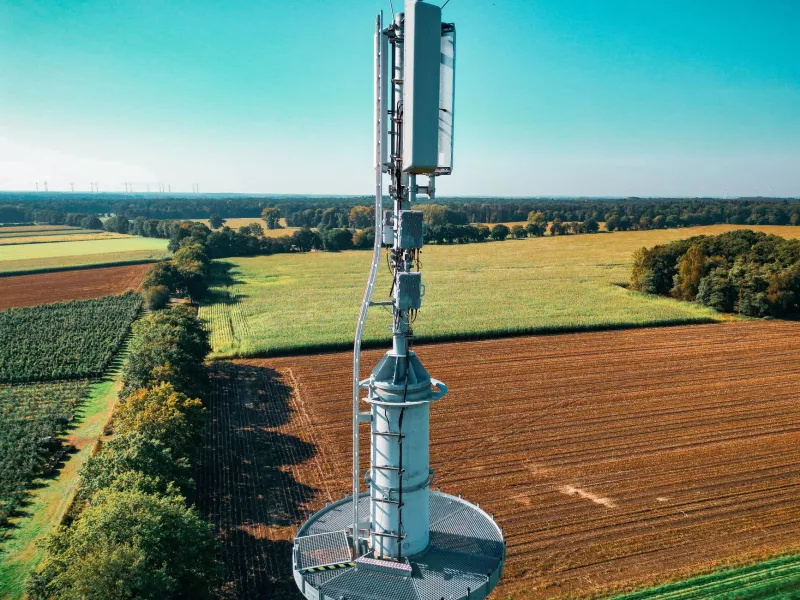
The roots of the rural broadband deficit are structural. Laying fiber-optic cable across low-density terrain is expensive, and the return on investment for private internet service providers is limited in areas where subscriber density is low. Satellite and fixed wireless options have historically offered inconsistent speeds and high latency — sufficient for email and basic browsing, but frequently inadequate for the real-time video and data transmission that telemedicine requires.
Federal investment has accelerated in recent years. The Infrastructure Investment and Jobs Act, signed in 2021, allocated $65 billion toward broadband expansion, with a particular emphasis on unserved and underserved communities. The FCC's Emergency Connectivity Fund and the USDA's ReConnect Program have directed additional resources toward rural areas. Advocates, however, caution that deployment timelines are long, oversight mechanisms remain inconsistent, and funding alone does not guarantee equitable outcomes if the communities most in need are not meaningfully involved in planning processes.
State-level policy adds another layer of complexity. Telehealth reimbursement rules, licensure requirements, and Medicaid coverage policies vary considerably across state lines, creating a patchwork environment that can disadvantage rural patients even when connectivity improves.
Emerging Solutions on the Horizon
Perhaps the most closely watched development in rural connectivity is the rapid maturation of low-Earth orbit satellite internet. Services such as SpaceX's Starlink have demonstrated meaningfully lower latency and higher throughput than legacy geostationary satellite providers, and early deployments in frontier and remote communities have shown promising results for telehealth applications. The cost of hardware and monthly subscription fees remains a barrier for lower-income households, though subsidy programs are beginning to address this.
Mobile health clinics represent another avenue of innovation. Equipped with onboard broadband connectivity, diagnostic tools, and remote consultation capabilities, these vehicles bring the digital health infrastructure directly to patients who cannot access it from home. Several health systems operating in the rural South and Midwest have expanded mobile clinic fleets in recent years, using them as a bridge while permanent infrastructure catches up.
Community anchor institutions — libraries, schools, tribal health centers, and rural health clinics — are increasingly being leveraged as telehealth access points, offering private consultation spaces with reliable connectivity for patients who lack both devices and internet service at home. These models acknowledge a practical reality: universal home broadband may still be years away in many communities, and interim solutions are not a concession to failure but a necessary expression of healthcare equity.
A Question of Equity, Not Just Technology
The digital divide in healthcare is ultimately a reflection of broader inequities that have long shaped who receives quality medical attention in the United States. Telemedicine, at its best, is a powerful equalizer — a mechanism for delivering specialist consultations, behavioral health support, and chronic disease management to patients who would otherwise go without. But its potential is only realized when the underlying infrastructure exists to support it.
For platforms and health systems committed to expanding digital care, the rural broadband crisis demands more than acknowledgment. It requires active investment in connectivity advocacy, community partnership, and care models that account for the realities of patients without reliable internet access. Digital health equity is not a secondary concern to be addressed once the technology matures. It is the central challenge of the telemedicine era.
Gerald, the retired miner in eastern Kentucky, is still making that two-hour round trip. He deserves better — not as an abstract policy objective, but as a patient whose health depends on a system finally willing to reach him where he is.