Your Wristband Knows Before Your Doctor Does: The Rise of Predictive Health Monitoring in Everyday American Life
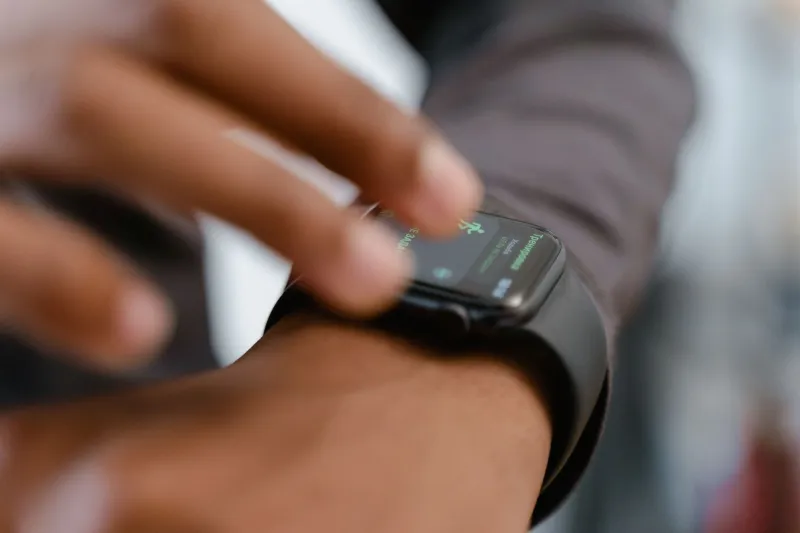
Susan Caldwell, a 52-year-old high school administrator from Raleigh, North Carolina, was not particularly worried about her health when she began wearing a consumer fitness tracker two years ago. She was, she admits, primarily interested in her step count. What she did not expect was that within four months, the device would flag an irregular heart rhythm pattern during a nighttime sleep cycle — a pattern her cardiologist later confirmed as atrial fibrillation, a condition that significantly elevates stroke risk if left undetected and untreated.
"I had no symptoms whatsoever," Caldwell recalled. "If that alert hadn't come through, I genuinely don't know when — or whether — we would have caught it."
Caldwell's experience is becoming less exceptional with each passing year. Across the United States, a quiet revolution in personal health monitoring is underway, driven by the convergence of affordable wearable sensors, sophisticated mobile applications, and machine learning algorithms capable of identifying physiological patterns that elude casual human observation. The implications for preventive medicine — long considered the aspirational but underfunded cornerstone of American healthcare — are profound.
Beyond Step Counts: What Modern Wearables Actually Measure
The fitness tracker of 2015 was, by contemporary standards, a relatively blunt instrument. Today's connected health devices operate in an entirely different category. Premium wearables now continuously monitor heart rate variability, blood oxygen saturation, skin temperature fluctuations, electrodermal activity, respiratory rate, and — in an increasing number of devices — blood glucose proxies and blood pressure estimates.
When these data streams are aggregated and analyzed by a robust health platform, they produce something far more clinically meaningful than any single metric in isolation: a longitudinal physiological portrait of the individual user. Departures from that baseline — subtle shifts that might be imperceptible to the wearer but statistically significant to an algorithm trained on millions of comparable data sets — can serve as early indicators of emerging health conditions.
This is the fundamental value proposition of integrated health tracking, and it is precisely the capability that platforms like mHealth System are designed to translate from raw data into actionable patient insight.
The Chronic Disease Burden and the Prevention Imperative
To understand why predictive monitoring matters, it is necessary to appreciate the scale of America's chronic disease challenge. The Centers for Disease Control and Prevention reports that six in ten American adults live with at least one chronic condition, and four in ten manage two or more. Diabetes affects more than 37 million people nationwide; hypertension is estimated to impact nearly half of all American adults; cardiovascular disease remains the leading cause of death year after year.
The economic toll is staggering — chronic diseases account for approximately 90 percent of the nation's $4.1 trillion in annual healthcare expenditures. Yet a substantial proportion of these conditions are preventable, or at minimum, manageable at far lower cost when identified early. The challenge has always been detection: most chronic diseases develop silently over months or years before producing symptoms severe enough to prompt a clinical visit.
This is the gap that connected health monitoring is uniquely positioned to address.
Case Studies in Early Detection
The evidence from real-world users is beginning to accumulate in compelling ways. Research published in Nature Medicine demonstrated that a consumer wearable device could detect atrial fibrillation with a positive predictive value exceeding 84 percent — a figure that compares favorably with many clinical screening tools. Separate studies have shown that continuous glucose monitoring, now available in consumer-grade formats, enables users with prediabetes to identify dietary and behavioral triggers for glucose spikes that would otherwise go unnoticed until a formal diagnosis.
Marcus Delgado, a 44-year-old logistics manager in Phoenix, Arizona, credits continuous health monitoring with prompting a lifestyle intervention that his physician later confirmed had reversed his prediabetic trajectory. "My app was showing me that my resting heart rate was climbing week over week, and my sleep quality scores were deteriorating," he explained. "Combined with the glucose data, my doctor said these were textbook early warning signs. We caught it before it became something I couldn't walk back."
These narratives are not anomalies. They reflect a pattern that preventive medicine specialists are increasingly acknowledging: when patients have access to continuous, contextualized health data, they engage more meaningfully with their own care — and often present to clinical encounters better informed and earlier in the disease trajectory.
The Science of Predictive Analytics in Health
Underpinning these individual stories is a rapidly maturing field of computational medicine. Predictive health analytics applies statistical modeling and machine learning to large physiological data sets, seeking to identify patterns that precede adverse health events with sufficient reliability to justify clinical action.
The approach is not infallible, and researchers are careful to distinguish between correlation and causation in this domain. A spike in resting heart rate, for instance, may indicate the onset of illness — or it may reflect a stressful week at work, an extra cup of coffee, or a change in ambient temperature. The sophistication of modern algorithms lies in their ability to contextualize individual data points within a broader pattern, reducing false positives while maintaining sensitivity to genuinely concerning signals.
As these systems are refined through larger and more diverse training data sets, their predictive accuracy is expected to improve substantially. Several academic medical centers, including institutions affiliated with the Mayo Clinic and Stanford Medicine, are actively conducting research into wearable-derived biomarkers as adjuncts to formal clinical diagnosis.
Privacy in the Age of Personal Health Data
The promise of connected health monitoring comes with a responsibility that neither platforms nor users can afford to treat casually. Personal health data is among the most sensitive categories of information an individual can generate, and the regulatory landscape governing its collection, storage, and use is complex and — in some respects — still evolving.
The Health Insurance Portability and Accountability Act (HIPAA) provides foundational protections for health information handled by covered entities and their business associates, but many consumer wellness applications operate in a regulatory gray zone that HIPAA does not fully address. Users should be deliberate about understanding the data practices of any platform they engage with: specifically, how data is stored, whether it is shared with third parties, and what rights users retain over their own health records.
Responsible connected health platforms — including mHealth System — are built on principles of data minimization, transparent consent, and robust encryption. Users who approach health tracking with an informed understanding of both its benefits and its privacy implications are best positioned to derive value from these tools without unnecessary risk.
Building a Connected Health Practice
For Americans interested in leveraging these technologies for preventive benefit, the entry point need not be intimidating. Beginning with a reliable wearable device, integrating it with a comprehensive health platform, and establishing a baseline over several weeks provides the foundation upon which meaningful trend analysis becomes possible. Sharing that data with a primary care provider — who can interpret it within the broader clinical context of the patient's history — closes the loop between digital monitoring and professional medical guidance.
The future of American healthcare is not reactive. It is anticipatory. And for the first time in history, the tools required to participate in that future fit comfortably on a wrist.