Midlife, Invisible: Why Mental Health Apps Are Failing Women at Their Most Vulnerable Decade

A Crisis Hidden in Plain Sight
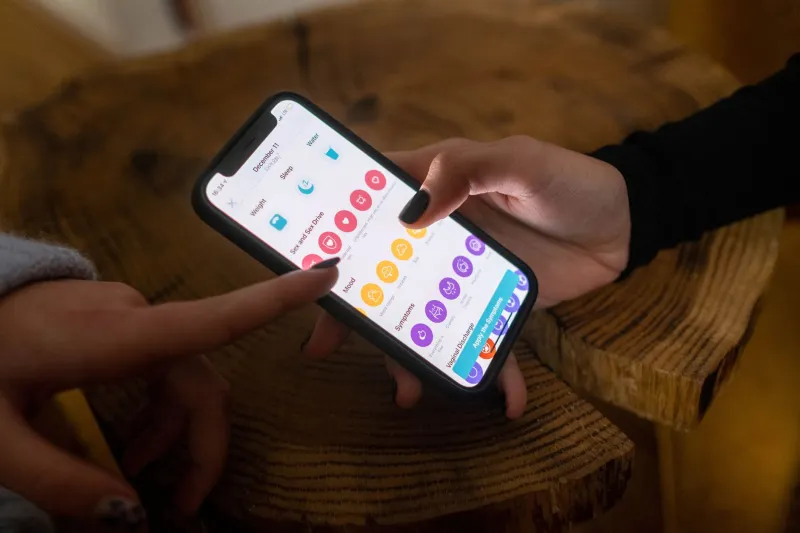
The statistics are stark and, for many clinicians, deeply troubling. Women between the ages of 45 and 64 have experienced some of the sharpest increases in suicide rates of any demographic group in the United States over the past two decades, according to data from the Centers for Disease Control and Prevention. Yet when those same women open a mental health app on their smartphones — an increasingly common first step in seeking support — the tools greeting them were largely designed with someone else in mind.
The proliferation of digital mental health platforms has been one of the more consequential developments in American healthcare over the last several years. Tens of millions of users now rely on apps to track their moods, complete cognitive behavioral therapy modules, or answer symptom screening questionnaires. For many, particularly those living in areas with limited access to mental health providers, these platforms represent the most accessible form of psychological care available. That accessibility, however, comes with a significant caveat: the algorithms powering these tools were predominantly validated on younger, often college-aged populations — and the clinical presentation of depression in midlife women frequently looks nothing like the textbook case those algorithms were trained to recognize.
When the Symptoms Don't Match the Checklist
Classic depression screening instruments, including the Patient Health Questionnaire-9, or PHQ-9, have become the backbone of many digital mental health platforms. The PHQ-9 asks users to rate the frequency of symptoms such as persistent sadness, loss of interest, and feelings of worthlessness. These are legitimate indicators of major depressive disorder. The problem, according to clinicians who specialize in women's mental health, is that depression in women over 40 often presents through a substantially different constellation of symptoms.
Irritability rather than sadness. Cognitive fog that patients frequently mistake for early dementia. Profound fatigue that no amount of sleep seems to resolve. Somatic complaints — joint pain, headaches, gastrointestinal disruption — that send women to their primary care physicians rather than mental health professionals. Anxiety that arrives as its primary feature, with the underlying depression masked beneath it. These presentations are well-documented in the clinical literature, yet they remain poorly captured by the standardized instruments embedded in most consumer-facing mental health applications.
The perimenopause and menopause transition compounds this diagnostic challenge considerably. Fluctuating estrogen and progesterone levels have direct effects on serotonin and dopamine systems, meaning that the neurobiological underpinnings of depression in this population carry a hormonal dimension that no mood-tracking app currently accounts for in any meaningful way. A woman logging a week of broken sleep, low energy, and persistent irritability into a wellness platform may receive a nudge to practice mindfulness breathing — when what she actually needs is a clinical evaluation that considers both her psychological and endocrine status.
The Algorithm's Blind Spot
The question of how mental health apps develop and validate their screening logic is not a trivial one. Many platforms rely on machine learning models trained on user data — data that skews heavily toward the demographics most likely to adopt digital health tools early: younger adults, urban residents, and individuals with higher levels of health literacy and disposable income. When a model learns to identify depression from this sample, it learns to identify a particular version of depression. The atypical presentations common in midlife women become, in a statistical sense, noise rather than signal.
This is not a hypothetical concern. Research published in peer-reviewed journals has documented the underdiagnosis of depression in women during the menopausal transition, even within traditional clinical settings where a trained provider is present. When the "clinician" is an algorithm optimized on incomplete training data, the risk of missing these presentations increases further.
App developers frequently cite the use of validated clinical instruments as evidence of their platform's rigor. Validation, however, is population-specific. A tool validated on a sample of undergraduate students at a major research university carries limited generalizability to a 52-year-old woman managing a demanding career, aging parents, and the physiological disruptions of perimenopause. The instrument may be validated; it is not, for this user, valid.
What Clinicians Want Developers to Understand
Mental health professionals who work specifically with midlife women describe a recurring pattern: patients who used a digital platform, received low-risk results or generic wellness recommendations, and subsequently delayed seeking in-person care — sometimes for months or years. The false reassurance that a completed screening questionnaire can confer is, in the clinical view of many practitioners, one of the more underappreciated risks of the current digital mental health landscape.
Clinicians advocate for several concrete changes in how platforms approach this demographic. First, screening tools should incorporate symptom domains specifically associated with depression in midlife women, including irritability, cognitive symptoms, somatic complaints, and anxiety-forward presentations. Second, platforms should prompt users to disclose information about menstrual status and hormonal health, not as a curiosity, but as clinically relevant context that can meaningfully alter the interpretation of reported symptoms. Third — and perhaps most critically — apps should establish explicit escalation pathways for users in this age range who report any concerning indicators, rather than relying on algorithms that may be structurally incapable of recognizing the risk.
There is also a broader point about the design philosophy of digital mental health tools. Platforms built primarily around engagement metrics — daily streaks, points for completed exercises, notifications encouraging return visits — are not inherently aligned with the clinical goal of accurate risk identification. A product optimized to keep users engaged is not the same as a product optimized to identify when a user needs a level of care the app cannot provide.
The Equity Dimension
The failure to adequately screen midlife women for depression is not a politically neutral design choice. Women in this age group who are also members of racial and ethnic minority communities face compounding barriers: mental health apps that underperform for their demographic, persistent stigma around mental health care, economic constraints on accessing traditional therapy, and a healthcare system that has historically undervalued both their psychological and their hormonal health concerns. The digital health revolution was, in theory, supposed to help close these gaps. For this population, it risks widening them.
Mobile health platforms have a genuine opportunity to do better. The data infrastructure exists. The clinical knowledge exists. What has been lacking is a sustained commitment to designing screening tools that reflect the full range of human experience — including the experience of women navigating one of the most physiologically and psychologically complex chapters of their lives.
A Call for Accountability
The broader digital health industry has invested considerable resources in demonstrating clinical validity and regulatory compliance. The same rigor should be applied to demographic inclusivity. Platforms that market themselves as mental health resources carry an ethical obligation to ensure their tools are capable of identifying distress across the populations they serve — not merely the populations that were easiest to study.
For women over 40 who are struggling and turning to their phones for answers, the stakes of getting this wrong are not abstract. They are measured in delayed diagnoses, in suffering that continues unnecessarily, and, in the most tragic cases, in lives that could have been preserved with earlier intervention. The technology to build better tools exists. The question is whether the will to build them does as well.