Engineered Urgency: How Health Apps Manipulate Alerts to Prioritize Engagement Over Your Wellbeing
When Your Phone Cries Wolf
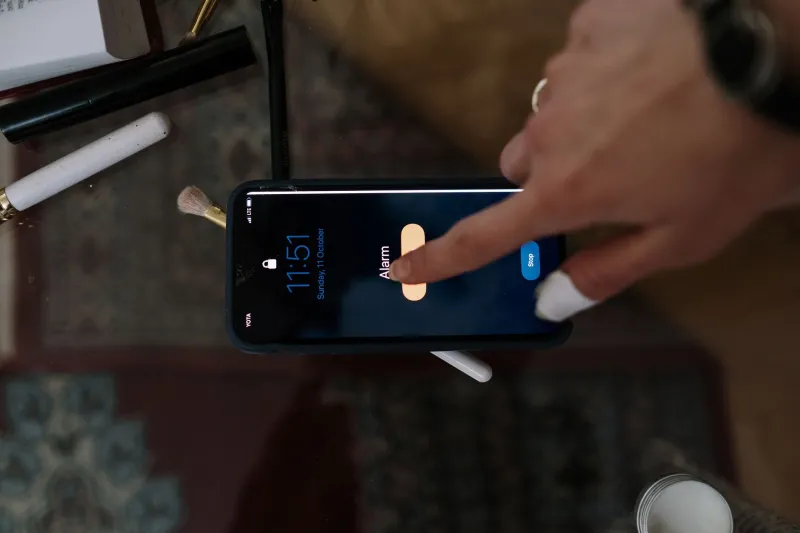
At 2:47 on a Tuesday morning, a Chicago-based teacher woke to a vibrating phone. The alert, arriving from a popular wellness app, informed her that her "recovery score" had dipped below optimal range and encouraged her to log her stress levels immediately. She lay awake for twenty minutes afterward, anxious about a metric she had not previously known to track.
No clinician had ordered this notification. No physician had reviewed the underlying data. The alert existed because a product team had determined that middle-of-the-night engagement signals correlated with higher monthly retention rates.
This scenario is neither rare nor accidental. Across the mobile health landscape, push notifications have evolved from simple reminders into sophisticated behavioral instruments—tools calibrated not merely to inform users, but to compel them to act, return, and remain.
The Architecture of Artificial Urgency
Behavioral designers who work within the health technology sector describe a set of well-established techniques that are as common in wellness apps as they are in social media platforms. Badge counts create a persistent visual cue of unresolved tasks. Streaks penalize inaction through the threat of lost progress. Alert language is carefully worded to invoke concern—phrases such as "your body needs attention" or "something seems off" are engineered to trigger the same neurological pathways as genuine medical warnings.
Dr. Renata Solís, a health psychologist who consults with digital health companies on user experience ethics, describes the problem plainly. "The brain does not easily distinguish between a notification that says your heart rate is elevated and one that says your friend liked your photo," she explains. "Both activate the same orienting response. Health apps exploit that response because it drives opens, and opens drive revenue."
The consequence is a notification environment in which clinical signal and commercial noise are nearly indistinguishable to the average user.
How Clinicians Actually Triage Urgency
In a functioning healthcare system, urgency is a carefully stratified concept. Emergency medicine physicians operate according to established triage protocols that separate life-threatening conditions from those requiring same-day attention, which are in turn separated from concerns that can safely wait for a scheduled appointment. A persistent cough and a suspected cardiac event do not occupy the same tier of response, and clinical training exists precisely to make that distinction reliably.
Mobile health platforms, by contrast, frequently flatten this hierarchy. A reminder to log a meal arrives with the same visual weight as an irregular rhythm alert from a wearable cardiac monitor. Both may generate the same notification badge, the same banner, the same vibration pattern. For users without clinical training—which is to say, nearly all users—the design itself implies equivalence where none exists.
Dr. Marcus Okafor, an internal medicine physician practicing in Atlanta who advises several digital health startups, has observed this phenomenon directly in his patient population. "I have patients who come into the office genuinely frightened because an app told them their sleep architecture was 'concerning,' " he says. "And I have patients who ignored a legitimate symptom because they had become so accustomed to dismissing app alerts that they stopped reading them carefully. Both outcomes are failures of design."
The Psychology of Compelled Response
Research into notification behavior consistently demonstrates that users respond to health-related alerts with greater emotional intensity than they do to equivalent alerts from non-health applications. A 2022 study published in the Journal of Medical Internet Research found that participants reported elevated anxiety following health app notifications at rates significantly higher than following social or productivity app alerts—even when the health notifications were objectively low in clinical significance.
This heightened responsiveness is not incidental. It is, in many cases, deliberately cultivated. Product teams at health platforms have access to A/B testing frameworks that allow them to measure precisely which notification copy, timing, and frequency patterns produce the highest engagement rates. The optimization target is not clinical outcomes. It is opens, sessions, and retained monthly active users.
Behavioral designer and former health tech product manager Priya Nandakumar, who left the industry partly over ethical concerns, describes a common internal framing: "The goal was always to make users feel like the app was looking out for them—that something important was happening that they needed to see. Genuine medical urgency and manufactured urgency produce the same metric, so there was rarely pressure to distinguish between them."
Regulatory Gaps and the Question of Accountability
The Food and Drug Administration has established regulatory pathways for software that meets the definition of a medical device, including certain apps that perform diagnostic or treatment functions. However, notification design itself falls outside the scope of most existing regulatory frameworks. An app can send hundreds of alerts per month that invoke medical language and generate measurable anxiety without triggering any oversight mechanism.
The Federal Trade Commission has pursued enforcement actions against health apps that make false or misleading claims, but the subtler manipulation embedded in notification architecture—urgency framing, loss aversion triggers, streak mechanics—has not yet attracted comparable regulatory attention.
Health policy researchers argue that this gap is consequential. "We regulate what apps tell you in their marketing materials," notes one researcher affiliated with a Washington, D.C.-based health policy institute. "We do not yet have a coherent framework for regulating what apps tell you at three in the morning through a push notification, even when that notification is designed to frighten you into engagement."
Toward Notification Standards That Reflect Clinical Reality
Some voices within the industry are advocating for a different approach. A small number of digital health platforms have begun experimenting with tiered notification frameworks that explicitly separate clinically validated alerts from engagement-driven prompts. Under these models, a confirmed irregular cardiac rhythm generates an immediate high-priority alert, while a recommendation to review weekly trends appears as a low-priority digest available at the user's convenience.
Clinician involvement in notification design is another proposed safeguard. When physicians and nurses participate in the process of determining which app-generated signals warrant urgent user attention, the resulting frameworks tend to more closely reflect actual medical triage logic rather than retention optimization goals.
Dr. Okafor advocates for what he calls "notification transparency"—a requirement that health apps disclose, in plain language, the clinical basis (or absence thereof) for each category of alert they send. "Users deserve to know whether a notification was triggered by a validated clinical threshold or by an algorithm designed to get them to open the app," he says. "That is a meaningful distinction, and right now they have no way to make it."
The Cost of Constant Vigilance
For users navigating a health app ecosystem that has not yet adopted these standards, the practical burden is significant. Attention is finite. Every non-urgent alert that demands engagement is attention redirected from genuine wellbeing—from rest, from human connection, from the kind of embodied self-awareness that no app can replicate.
Mobile health technology holds genuine promise for extending care, improving adherence, and surfacing early warning signs that might otherwise go unnoticed. That promise is undermined, not advanced, by notification systems calibrated to manufacture urgency in service of retention metrics.
The question facing both the industry and its regulators is whether health apps will be held to a standard befitting their subject matter—or whether the logic of engagement optimization will continue to colonize the one domain where its costs are most directly measured in human health.