Ordered but Not Understood: When Clinicians Recommend Apps They've Never Opened

Ordered but Not Understood: When Clinicians Recommending Apps They've Never Opened
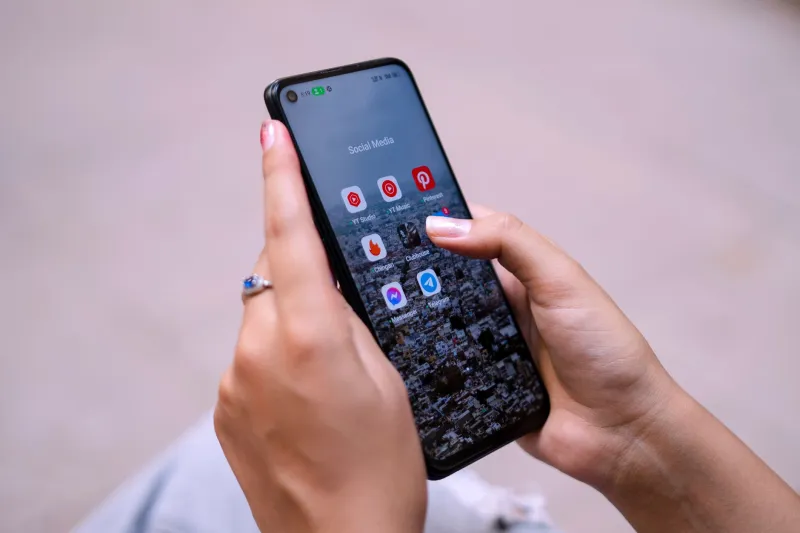
Something quietly unusual is happening inside exam rooms across the country. A physician wraps up a routine visit, hands a patient a sticky note—or, increasingly, a printed QR code—and says something like, "There's a good app for that. You should try it." The patient nods, leaves, downloads the application, stares at a dashboard of unfamiliar metrics, and then does what most of us do when we encounter technology we don't understand: nothing.
The physician, meanwhile, has moved on to the next appointment, confident that a recommendation was made. Whether it was a useful one is another matter entirely.
A Recommendation Without a Road Map
The digital health marketplace has expanded at a velocity that formal medical education has not matched. There are now more than 350,000 health-related applications available across major app stores, according to the IQVIA Institute for Human Data Science. A meaningful subset of these carry genuine clinical utility—tools for diabetes self-management, cardiac monitoring, cognitive behavioral therapy modules, medication adherence tracking. Yet the infrastructure for teaching clinicians how to evaluate, recommend, and support these platforms remains, in most training programs, essentially nonexistent.
Dr. Marcus Holloway, an internal medicine physician practicing in suburban Ohio, describes the situation plainly. "I've recommended apps to patients for blood pressure logging, for mood tracking, for sleep monitoring. But if a patient calls back and says they can't figure out how to sync the device, I have nothing to offer them. I'm not trained for that. Honestly, most of what I know about these tools I learned on my own time, on my own phone."
His candor reflects a broader pattern. A 2022 survey published in the Journal of Medical Internet Research found that fewer than 20 percent of physicians reported receiving any formal instruction on digital health tools during their training. Among those who did, the majority described that instruction as cursory—a single lecture, perhaps, or a brief module buried inside a broader health informatics course.
The Curriculum Has Not Caught Up
Medical education in the United States remains, at its structural core, a discipline built around physiology, pharmacology, and procedural competency. The Liaison Committee on Medical Education, which accredits U.S. allopathic medical schools, introduced requirements around health informatics in recent years, but critics argue those standards stop well short of the practical fluency that modern practice demands.
"We teach residents how to write prescriptions for medications that have been studied for decades," notes Dr. Priya Sundaram, a clinical informaticist and faculty member at a major Midwestern academic medical center who asked that her institution not be named. "We do not, in any systematic way, teach them how to evaluate a digital therapeutic for evidence quality, privacy compliance, or usability. Those are not optional skills anymore. They are core competencies."
The American Medical Association has published frameworks for evaluating digital health applications, and the FDA's Digital Health Center of Excellence has worked to clarify the regulatory landscape around software as a medical device. But translating those federal and organizational resources into standardized clinical training has proven slow and uneven.
What Patients Experience on the Other Side
For patients, the gap manifests in predictable and discouraging ways. They receive a recommendation that carries the implicit authority of a medical directive, invest time and sometimes money into a platform, and then encounter friction—technical, conceptual, or motivational—with no clinical support structure to help them through it.
Lorraine Castillo, a 58-year-old type 2 diabetes patient in San Antonio, Texas, was directed toward a continuous glucose monitoring companion app by her endocrinologist eighteen months ago. "He said it would change my life. And maybe it could have. But when I got home and tried to set it up, I couldn't figure out how to get my readings to actually show up in the app. I called the office. The nurse didn't know. I ended up just not using it."
Castillo's experience is not an outlier. Research consistently shows that patient adoption of clinician-recommended digital health tools drops sharply when no follow-up support is provided. A study from the University of California, San Francisco found that app abandonment rates within 30 days exceeded 70 percent for tools recommended during clinical encounters without supplementary instruction.
The Liability and Trust Dimensions
Beyond patient outcomes, the recommendation gap carries implications for clinical liability and institutional trust. When a physician recommends a tool without understanding its data practices, they may inadvertently be directing patients toward platforms that monetize personal health information, lack HIPAA-compliant data handling, or make algorithmic suggestions that fall outside the clinical context in which the recommendation was made.
"A physician who recommends an app is, in some meaningful sense, vouching for it," says a health privacy attorney based in Washington, D.C., who consults with hospital systems on digital health policy. "If that app later exposes a patient's mental health data, or provides guidance that contradicts the treatment plan, the question of professional responsibility becomes genuinely complicated."
Building the Bridge Between Prescription and Proficiency
Solutions do exist, though none are yet operating at the scale the problem demands. Several health systems have begun embedding digital health navigators—staff members specifically trained to onboard patients to recommended platforms—into their care teams. Others have developed internal vetting processes that restrict clinician recommendations to a curated library of evaluated applications.
At the medical education level, institutions including the University of Arizona and Vanderbilt University Medical Center have introduced dedicated digital health electives and integrated technology evaluation into core clinical training. These efforts are promising, but they remain the exception.
For the broader ecosystem to function as intended—where a clinician's digital recommendation carries the same weight and follow-through as a pharmaceutical one—the training infrastructure must expand proportionally to the tool landscape.
Until then, patients downloading apps on a physician's word are, in many cases, navigating a sophisticated clinical technology alone. The digital cart, it seems, is still running well ahead of the clinical horse.